San Saba County Pecan Field Day to be held May 1st.

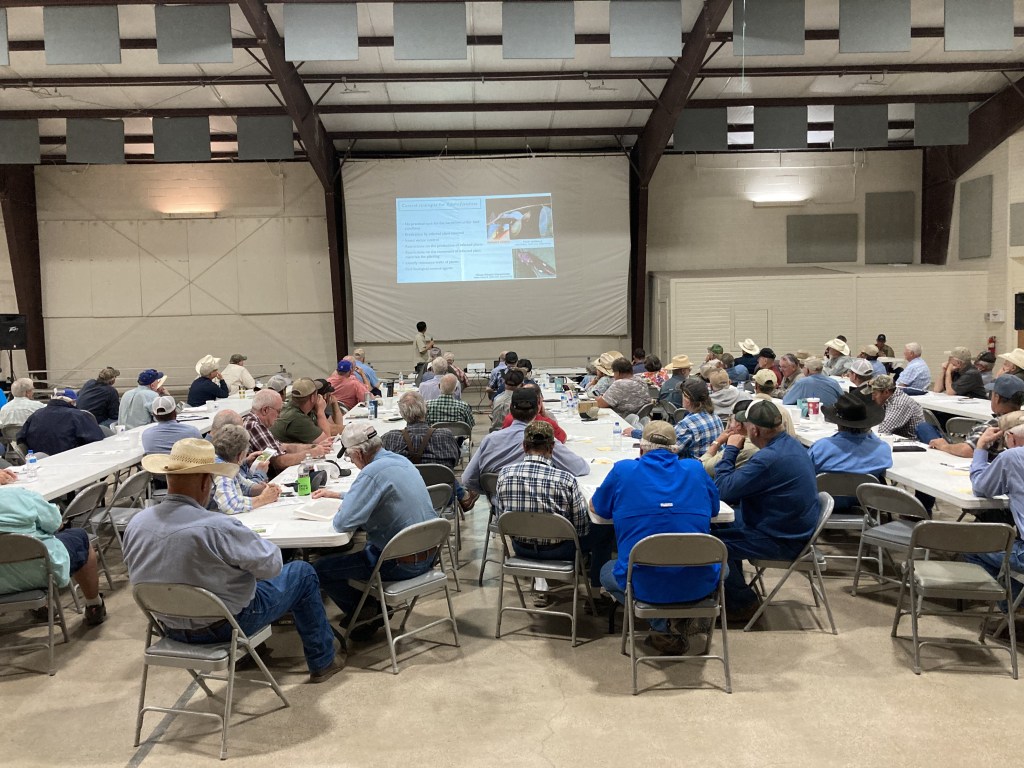
Texas A&M AgriLife Extension Service and the San Saba County Pecan Growers Association will host the annual Pecan Field Day on Monday May 1st at the San Saba Civic Center, 1190 Thomas Stewart Drive.

Registration will begin at 8 a.m. with the program beginning at 9 o’clock. There will be a $40.00 registration for those who Pre-register and $60.00 at the door. Lunch is included in the registration and will be grilled pork loin, boiled red potatoes and green beans prepared by the District 7 County Extension Agents.

Speakers for this year’s program: Tom Guthrie, Mills County Extension Agent, Sunlight Management in Pecan Orchards; Monte Nesbitt, Extension Horticulture Specialist, College Station will discuss Pecan Integrated Pest Management; Monte will also present Pecan Pathology. Bob Whitney, Extension Organic Specialist, will discuss Pecan Laws & Regs.

Six Continuing Education Units have been approved by Texas Department of Agriculture. These are for those of you with Private, Non-Commercial, or Commercial Applicator License. (3 General, 1 IPM, 2 L&R) This annual Field Day has been well attended for many years. Plan to attend and invite someone interested in the Pecan Industry. Please call to pre-register by noon Friday April 21st. This will enable Michael Palmer to better prepare for lunch. Call or come by the San Saba County Extension office to register or if you have questions. We are on the first floor of the Courthouse east side. (325) 372-5416

Tarleton Ag Students and the Viva Fresh Expo

March 31-April 1, I was privileged to travel with and discuss organic with some Tarleton State University agriculture students. It was a weekend of organic agriculture with a particular emphasis on organic fruits and vegetables.  I was asked to help out with the tour because I do know a lot of people in both the conventional and organic world of fruits and vegetables and to help talk about Texas organic production in that world.  The Viva Fresh Expo was held in Grapevine this year which is very close to Tarleton State University and Stephenville and so an easy trip to make and lots of fun. The Viva Fresh Produce Expo was created in response to the vegetable/fruit industry’s need for better opportunities to create meaningful networking opportunities that highlight products and build relationships. The Texas International Produce Association and Viva Fresh conduct a special program where they invite college ag students to attend Viva Fresh to learn and meet folks in the produce industry. To say the least, the students from Tarleton were wowed at the Viva Fresh Expo when they saw nearly 3,000 folks on the exhibit floor and talked to hundreds of prospective employers!

On the way to Viva Fresh we were treated to a behind the scenes tour of the Fort Worth Botanic Gardens and the Botanical Research Institute of Texas (BRIT). It was one of the best tours I have ever been on and the staff at the Botanical Gardens and BRIT are super to work with. If you have never, been it is definitely worth the time.

NRCS Organic Ag Tour in March

A few months ago, I was contacted by NRCS to help with their organic training program.  NRCS is making a real effort to reach out to organic growers and to offer more assistance both on a personal level and with new programs and services. 

One of the things they wanted to do was to get their local staff out and on organic farms and to meet organic farmers.  The only way to do that is to travel around the state and meet people and so in March we did!  The plan was for me and a few NRCS state staff to travel to the sites and to meet the local staff at the farm.  Any NRCS staff member within 2 hours of the organic farm was invited to travel and spend a few hours visiting the producer and learn about the organic production in their area.

Where did we go? We started out near O’Donnell on the Carl Pepper cotton farm (2nd row). Wow! The way Carl conserves moisture in dry west Texas. Next, we traveled to Central Texas near Dublin to see Henk Postmus’ organic dairy and organic forages done right (3rd row). From there we moved east to Wills Point to see Jamie and Katy Kulesa and Lone Star Organic Dairy (3rd row).  In one week almost a straight-line west to east and the change in scenery was fascinating!

The next week we started off in the Rio Grande Valley at South Tex Organics and talked citrus and onions with the Holbrook’s (top row). The citrus was blooming, and onion harvest was just starting. Traveling north we ended up in Runge to talk regenerative ag and organics in sorghum fields and cattle pastures at the Zack Yanta farm (4th row).  Zack has many great experiences in soil health improvement. Last, we had a great visit with Kenneth Danklefs at Garwood in rice country.  Vivian Spanihel with American rice growers talked organic rice marketing and Kenny gave us a rice field tour and talked organic production (bottom row).

We haven’t made it to the High Plains just yet, but it is on the agenda soon!  It was a great chance to see lots of organic farms and talk to super farmers about organic.  Thanks to everyone who helped.

Strengthening Organic Enforcement

Lots of new rules affecting organic throughout the WORLD!

The Strengthening Organic Enforcement (SOE) final rule reduces fraud in the organic marketplace; strengthens oversight of organic producers, handlers, and certifiers; and improves USDA’s enforcement mechanisms. USDA used public comments to refine this final rule and maximize benefit to the organic industry.

Okay, that is the introductory paragraph to this publication which is pretty good – SOE Publication. What do these changes mean for the regular producer? Probably you won’t notice any change but the rest of the world that interacts with ORGANIC will notice a change.

First, it has strengthened traceability from the farm to the end user. Basically, all supply chains in agriculture are becoming more transparent but organic is trying to be even more transparent so that the consumer feels like they know you and what you do. It is like you are becoming the farmer around the corner from them and so they trust you.

Another important point is that the authority that USDA Agriculture Marketing Service (AMS) has to both oversee and enforce organic trade in the US and abroad has been strengthened. Basically, they have both the rules and the ability to enforce those rules against organic violators.

There are more aspects of SOE but another one I think is important – they have significantly reduced the number of uncertified entities in the organic supply chain. Specifically, they are requiring both importers and exporters to be certified and that they maintain traceability.

Lastly, these are things an individual organic producer needs to be aware of and be ready for starting this year.

  • Unannounced inspections. Your certifier will be required to do unannounced inspections on 5% of the operations it certifies – that could be you! If you say, “there is no way they can do an unannounced inspection on my farm!” Well, you won’t be certified any more….
  • Mass-balances, in that quantities of organic product and ingredients produced or purchased account for organic product and ingredients used, stored, sold, or transported; and that organic products and ingredients are traceable by the operation from the time of purchase or acquisition through production to sale or transport; and that the certifying agent can verify compliance back to the last certified operation… Example: you plant 100 lbs. of seed per acre on 100 acres then you should have receipts for 10,000 lbs. of seed.

If you want to read more then I recommend this “Side by Side” publication that shows what was and what has changed. Strengthening Organic Enforcement: Comparison of Old and New Regulatory Text

Educator Achievement Award

I know it is a pretty rough looking crowd in the picture above, but I will have to say I am very proud of the honor!

Keith McIlvain (left) and Jim Farley (right), Texas Ag Industries Association (TAIA) Board members are shown presenting me (Bob Whitney – in the middle) the 2023 TAIA “Professionals for Texas Agriculture”, Educator Achievement Award in Recognition of Outstanding Contributions to TAIA Educational Programs.

The Texas Ag Industries Association represents the hundreds of agriculture companies in Texas that work closely with all aspects of commercial agriculture.  Members meet on a regular basis to decide on issues that affect agriculture companies in Texas and to learn about new and innovative ideas within agriculture that can benefit TAIA member’s customers and clients.

I know and work with many of the members and have worked with the organization over many years. They are a great group of folks, and I am indebted to them for this recognition. Thank you!

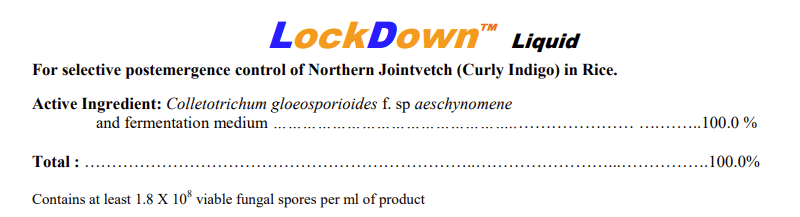
LockDown Organic Herbicide for Northern Jointvetch and maybe Hemp Sesbania control in rice!

In meetings with organic rice producers there is a common theme – we need to increase organic nitrogen fertility and control weeds in rice!  The two most often mentioned weeds in rice (outside weedy or red rice) is Hemp Sesbania and Northern Jointvetch. 

These weeds are very similar in appearance, at least as very young plants and both are problems throughout the semi-tropical areas of Texas to Mississippi.  Hemp sesbania can grow to be so bad that you can’t get the combine through, and those portions of the field are just abandoned.

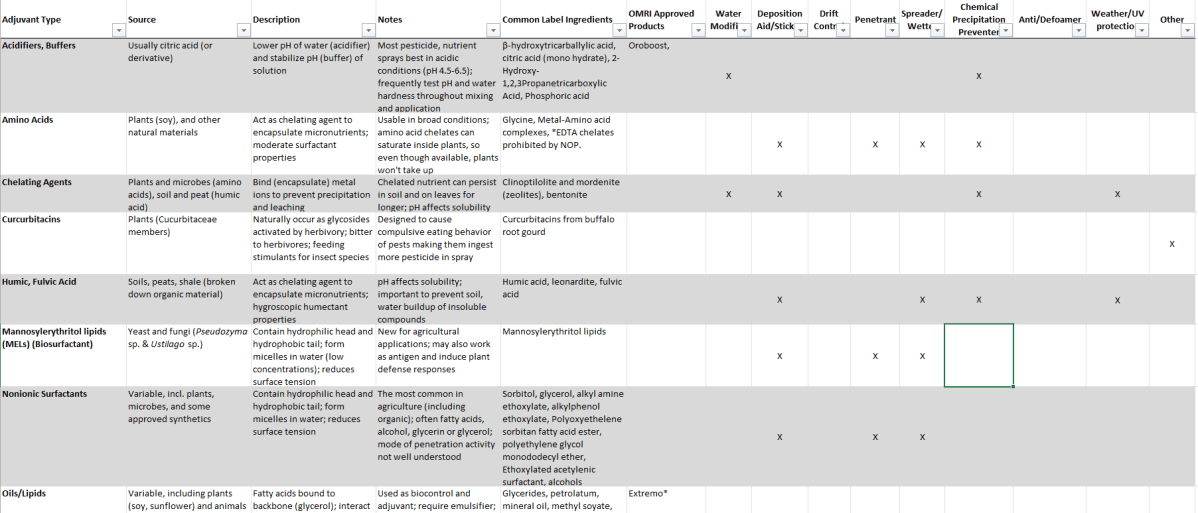
In doing a little research I found that the fungus Colletotrichum gloeosporioides f. sp. Aeschynomene packaged and labeled as LockDown Bioherbicide, is very effective on Northern Jointvetch and has been effectively used in Arkansas rice fields for many years.  Now Arkansas rice farmers don’t have a real problem with Hemp Sesbania but in researching the fungus I have found several research reports that show this fungus can also be very effective against Hemp Sesbania (download report below) if used with Silwet L-77 Super Spreader (or equivalent OMRI Approved spreader/sticker).

The company that formulates LockDown herbicide is small and orders for the bio-herbicide fungus have to be made in advance so that it can be “brewed” and ready to apply.  Cost is less than $15 an acre. It is a bioherbicide with nothing but fungal material in the product. Certified organic operations would need to get approval from their certifier before using. (LockDown label below)

If any organic rice farmer is interested in applying LockDown Herbicide to control Northern Jointvetch and/or experimenting on Hemp Sesbania control, please let me know.  We will be getting an order ready and picking up the Lockdown Bio-Herbicide for growers later this spring.