Organic Seed May Soon Be Required

I got my email magazine from the Organic Farmers Association and right in the middle is good article by Harriet Behar entitled “Organic Seed: Protect Organic Integrity from GMO’s.”

“With more genetic engineering in nonorganic seed occurring, organic growers in the United States and Canada will need to aggressively increase their use of organic seed over the next few years.”

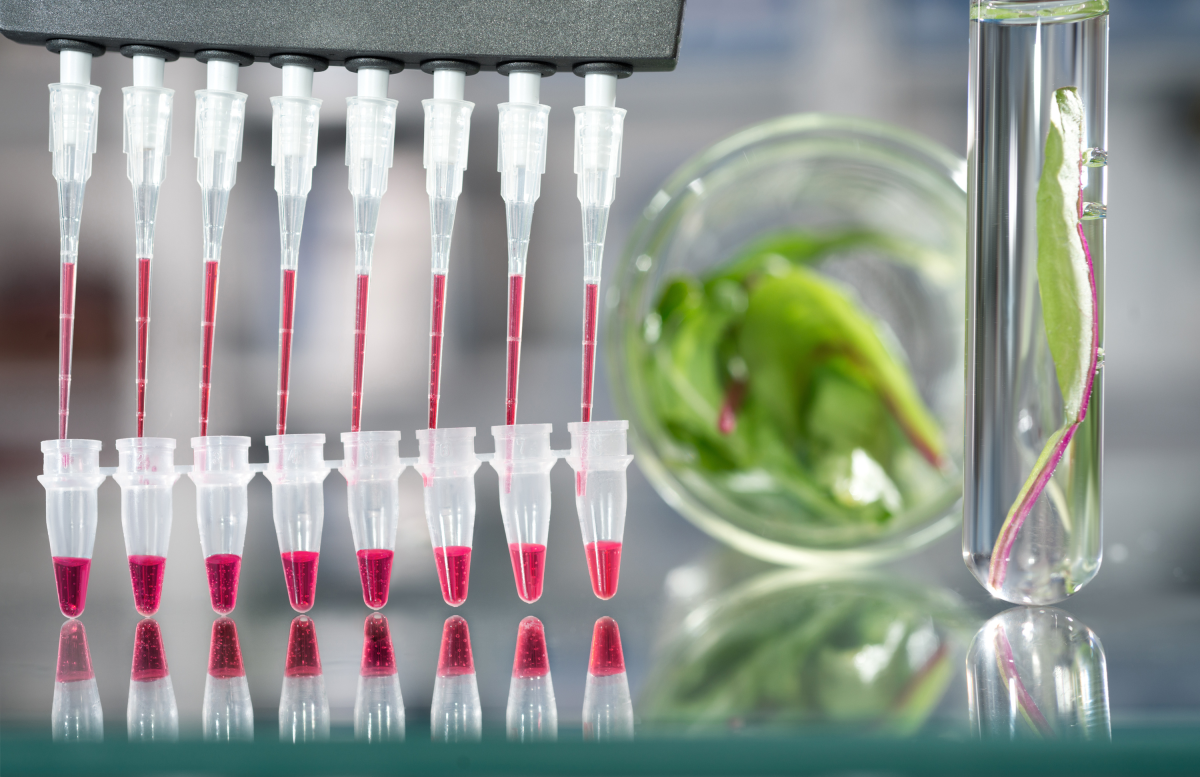
I have heard this issue raised many times over the last few months and it is because most in the organic industry don’t know any way to make sure the nonorganic seed you may be buying has not been genetically engineered. GE or genetically engineered seed is a process whereby no new DNA is introduced to the plant but is simply a modification of the original plant. According to Harriet Behar, “the only gene-edited seed available in the US is mustard greens.” I didn’t know about this one, but I do know that there have been articles in American Fruit Grower about companies exploring GE for several fruit crops including blackberries.

Harriet makes the point, “gene-editing technologies like CRISPR are not traceable or trackable since there is no marker to test if gene-editing occurred.” GMO’s have a marker which is why they can get you for saving THEIR seed! Currently the problem (GE Plants or Seed) is so new and so controversial that the National Organic Program has not addressed the issue even though the NOSB has asked them to classify GE just like a GMO.

What may be pushing this issue to the forefront is the European Union and its organic program. In the EU they list specific crops by country that must be grown with organic seed because they have determined there is enough organic seed available. If the EU moves to put more organic varieties on these country lists because of the potential for GE in seed varieties, then the US is sure to follow suit. This is because of the organic equivalency agreements between the US and EU which make organic trade possible.

It is a good article and so I pulled it out and have it here to download. If you haven’t had a chance to sign up for the free email magazine from OFA then try it now….

Organic Research Winner!

Sometimes you read a research paper at just the right time – basically because someone asked you a question that the research paper talks about! This is exactly what happened when I got notice that this paper was being published. I had a question about how to do weed control in organic wheat and the question is one that is hard to answer. My answer, basically you wait as late as you can to plant, make sure to have a clean seedbed, plant a little deeper than normal and use a rotary hoe set very shallow to take out “white thread” weeds till the wheat is established.

Notice the wheat seed singulated on the vacuum planter plate.

But what if there was a better way? This research paper explores the idea of a uniform planting pattern for wheat across the field versus a typical drill which plants in drill rows that are about 7-8 inches apart. This is not necessarily new technology. We do have precision planters for small grains that do a great job placing seeds together in a uniform pattern. There are many studies using precision planters in wheat that show a minimum increase in yield of 10% with a maximum of 60%.

What is unique about this research is the fact that they were looking at organic wheat production and the ability of precision planting to increase yields but maybe as important also control weeds. In the two years they conducted this study, the weed biomass production was 73-82% less with the precision planting (Uniform seed spacing) versus the typical drill row spacing pattern. So, what do you do? It could be worth it to try and lease a precision drill for your next organic wheat crop and see if it helps – I bet it does.

More Resources (just click to see)

Organic Weed Control

I was recently asked to give a presentation on Organic Weed Control to the Texas Weed Information Group or TWIG. This is a statewide or bigger group that is focused on weed identification, weed issues, weed control, weed anything! This group has over 300 members from researchers to Extension Specialists and Agents to consultants to farmers and is a great way to get smart folks together to work on a problem…. I only had 10-15 minutes to get it done as most speakers had but I had a great time being there and even thinking through what I would say. I started off with this —-

Anyone in organic knows that you follow the rules, and the first rule is to prevent weeds in organic if possible.

Also, in organic we can do cultivation and we do! This is what farmers have done for centuries but has been forgotten in just a few decades. (Great Publication on Blind Cultivation of Early Season Weeds) Just click that link to see it!

Most of Texas’ organic farmers start with a rotary hoe then move to sweeps and finger weeders and finish with hoe hands. The longer a field is organic the better the weed control…. (Steel In the Field is an old but really good look at Tools for Weed Management) Click this link above!

Organic does have “chemicals” approved for weed control and in this slide, you see that there are not many. The QR code takes you to the whole list. or just click here: Organic Products List

This slide illustrates the reason that organic “chemicals” are used sparingly. The cost per acre makes them expensive but they work great for spot treatments around the farm.

This last slide emphasizes an exciting potential for organic weed control – Bioherbicides!

Bioherbicides are made from bacteria or fungi that infect a particular weed with the hope that it will kill the weed if the bacteria or fungus is applied at high numbers. In this slide I talk about fungi that can infect field bindweed, pigweed, and northern joint vetch. These naturally occurring organisms are found in Texas infecting our weeds but generally not in high enough numbers to kill out the weeds in a field. LockDown is a good example of a fungus found on northern joint vetch (NJV) in Texas rice fields, but it doesn’t wipe it out. But when you take millions and millions of pieces of this fungus and spray it on a NJV weeds in rice fields it infects and ultimately kills northern joint vetch!

Here is another look at various organic control for a very bad weed, field bindweed. Organic Control of Field Bindweed – Click the link to see.

Or you might want to check this out: Best Cover Crops for Weed Control and Fertility

Or how about this video on weed control with tillage: Weed Control for Organic

SARE Book titled Manage Weeds on Your Farm is an excellent resource with lots of pictures on different weeds.

For another potential option, we can use the type of planting to help control weeds. This research study provides great insight into using a newer type of drill for wheat with tremendous reduction in weeds. Organic Research Winner!

I am adding this into the discussion. Several organic growers are using Weed Zappers in row crops and here is a use in perennial crops.

Weed management is a significant problem in organic orchard and berry production, due to limitations on crop rotation and tillage between crops. Organic weed control requires frequent soil disturbance, hand labor, high rates of organic herbicides, or the application of large amounts of organic or synthetic mulches. These practices can be barriers to economic, soil health and sustainability goals. In this project, a team of researchers in three states will consider the performance, safety, and economic and environmental sustainability of electric weed control (EWC) in perennial crops.  To read more just click this link and see video, updates and pictures.

Who Needs to be Certified Organic?

The question at hand is no longer as simple as it used to be! However, obtaining certification for anything organic has become almost a necessity. It might seem somewhat difficult, but the recently implemented Strengthening Organic Enforcement regulations are mandating many non-certified entities to acquire organic certification. This process is deemed necessary to ensure the integrity and transparency of organic products – something the consumer has been demanding for a long time. When does this go into effect? March 19,2024 and as it gets closer folks are getting nervous.

Why am I bringing this up? I have had many questions over the last few weeks from folks who want to know if they need to be certified. Or I have had questions from certified operations who want to know if someone they deal with needs to be certified. These new rules affect everybody in organic including producers, processors and handlers; all organic certifiers and inspectors; and many who are in the organic supply chain who have not been certified in the past. That said there are exemptions to certification, and I want to cover those here. This is straight from the regulations.

7 CFR 205.101(e): An operation that only receives, stores, and/or prepares for shipment, but does not otherwise handle, organic agricultural products that: (1) Are enclosed in sealed, tamper-evident packages or containers prior to being received or acquired by the operation; and (2) Remain in the same sealed, tamper-evident packages or containers and are not otherwise handled while in the control of the operation.

7 CFR 205.101(f): An operation that only buys, sells, receives, stores, and/or prepares for shipment, but does not otherwise handle, organic agricultural products already labeled for retail sale that: (1) Are enclosed in sealed, tamper-evident packages or containers that are labeled for retail sale prior to being received or acquired by the operation; and (2) Remain in the same sealed, tamper-evident packages or containers that are labeled for retail sale and are not otherwise handled while in the control of the operation.

7 CFR 205.101(h): An operation that only arranges for the shipping, storing, transport, or movement of organic agricultural products but does not otherwise handle organic products.

If you think you are exempt from certification, then maybe you should check out this resource from CCOF (California Certified Organic Farmers) called an Exempt Handler Affidavit. This simple form asks a series of questions that helps you know if you are exempt and answering these questions lets the organic business you are dealing with know you are exempt. Then you sign the form and hand it to the business so they can file it in the OSP (Organic System Plan).

How serious is this? Well this is from the federal record!

7 CFR 3.91(b)(1)(xxxvi): Civil penalty for knowingly labeling or selling a product as organic except in accordance with the Organic Foods Production Act of 1990, has a maximum of $21,689 per occurrence. You call it organic and get paid for it, you better be CERTIFIED ORGANIC.

What’s Interesting for Texas in this Report?

Because I subscribe to information from SARE or Sustainable Agriculture Research & Education I got a recent email annoucing that this Survey Report was ready and downloadable. I can’t help but look at things like this to see if there is anything Texas Organic producers can learn or use to make changes. Cover crops are a big, controversial issue, and one that I can get lots of opinions on, no matter where I go in the state. So let me share some of my “opinions.”

795 farmers (probably most are conventional farmers but some are certainly organic) who are current cover crop users, former users, and who have never used cover crops from 49 different states, filled out the survey. Here is a look at the distribution.

As you can see only 17 from Texas filled out the survey and it is easy to see that the Midwest is overloaded with participants! This may sound a little strange or maybe you know (like I do) that Texans don’t do surveys, they just don’t like them. That said, look at the sources they used to advertise the survey and encourage farmers to fill it out.

Maybe you are in one of these “groups” but I never did see or get a notice and I have a farm and have planted cover crops. My general feeling is that the Midwest has a lot of farmers and a lot of infrastructure is built around those farmers so they do get a lot of attention. Also, we struggle planting cover crops and so we are not going to get near as many farmers “excited” about a cover crop survey. BUT, because we dont get excited about cover crops we dont get the potential interest in developing cover crop payments or cover crop insurance in Texas. It is a “chicken and egg” kinda thing.

What is the median (the number right in the middle of a list of numbers) age of farmers who did the survey? 59, which is slightly older than the median age of all farmers in the US at 57.5 years. What is interesting is that 66.6% of all farmers in this survey are above 50. The US is just getting older and farmers are aging fast!

I am going to skip over a lot of demographic information in the survey to get to some data on cover crops. I love this chart above because it gives us a reason for planting cover crops, in other words, “why are you planting a cover crop and does it do what you want?”

For organic growers in Texas I do believe that all of you have said to me any one of the top 5 reasons listed above are more than likely in your top 5 reasons too. If you are farming organic you get these benefits! These farmers agree because they are observing these benefits from cover crops in every state they are planted.

Okay, there is a lot more information in the report, but I want to mention this because it is a question I get a lot – what cover crop to plant? First let’s take a look at the acres planted to each species so you get an idea of the importance farmers placed on the species.

You can tell that cereal rye is by far the most popular either by itself or in a mix. I was surprised by the acres dedicated to radishes but I do know they are popular in the Midwest. I really thought that cowpeas, sunn hemp and other summer cover crops would be planted on more acres but probably only in southern states and as I mentioned not many farmers in southern states participated in the survey.

Now here is a chart about what is used in cover crop mixes. I thought this was interesting and did validate the recommendations I give to organic farmers.

I like cereal rye (I am hoping Carl Pepper plants some barley on a few acres this year so we can see if it works in West Texas) and I like Hairy Vetch both in a mix. You can add in radishes or turnips if you understand that they probably won’t make it through the winter. I have never had much luck with clovers in Texas and I have trouble planting Austrian winter peas since it is such a big seed. Mine end up in streaks or only in one place!

One last chart and I will stop. This part of the survey deals with your information sources and I am very interested in how farmers learn – it is my job!

You will notice that farmers predominately learn by doing and learn from each other because they are “doing” it. I also realize that Ag Media is important and yet Ag Media is generally getting information from Extension, Research and Industry. That said I am very pleased to see Extension ranked fourth in this list and to me that is about right. My take away from this is that Extension should be doing cover crop demonstrations on farmers fields (learn by doing) and inviting other farmers to come learn. Sounds like a good old fashioned “Extension Crops Field Day!”

Let me know your thoughts, I am always open to new ideas. If you want to download or read the report just click on this link. 2022-23 National Cover Crop Survey

Texas Organic Export Market Potential

Spring of 2022, the Texas Department of Agriculture (TDA) put out a call for applications for the Agricultural Development: Agricultural Commodity Export Support (ACES) Pilot Program for Texas commodity agricultural trade organizations, agricultural cooperatives, and agricultural commodity or producer organizations that are interested in conducting export activities to further expand the international market presence of Texas agricultural commodities.

The TDA Organic Advisory Board and the board’s diverse membership is a great sounding board especially for new ideas. My discussions with Board members help me to know that there was a possible export market for organic produce but there really wasn’t much of an idea of where to begin. I reached out to Dante Galeazzi, Executive Director of Texas International Produce Association (TIPA) to see if they might be interested in partnering with us (Texas A&M AgriLife and CNAS) to submit a grant to do this investigation. Dante is a very positive person and is super to work with, so of course the answer was yes!

I work with a couple of outstanding economists in Dr. Luis Ribera and Landyn Young and they took the challenge to help put the grant together with Dante and TIPA and it was funded by the Texas Department of Agriculture. The overall purpose of this grant project with TIPA was to evaluate the export potential of selected Texas organic commodities and the proposal included these top objectives.

Objective 1. Identify the top five Texas organic fruits and/or vegetables with the largest potential for the export markets.

Objective 2. Conduct a market study of selected Texas organic commodities using secondary data available from the U.S. government and from other countries’ governmental sources. 

Objective 3.  Identify top three or four markets for selected Texas commodities

Objective 4. Analyze export trends from US/Texas and main competitors looking for opportunities to access and/or expand market share for the selected Texas organic commodities.

Objective 5. Identify and analyze general border measures and trade barriers such as SPS requirements, product form, TBTs such as packaging/labeling requirements, and import tariffs, among others to evaluate the competitiveness of selected Texas commodities.

Objective 6.  Develop recommendations on how Texas can increase access to foreign market and/or increase market share.

Fast forward to this summer and the work has been done! I am quite impressed with their work and happy to share it with you. Below are the publications developed by Dr. Ribera and Landyn Young on these crops with the most potential in the organic export markets. Please take a look at the markets and the potential and let us know your thoughts!