Little things…

Sometimes it is the little things that can really make the day brighter. A few weeks ago I wrote a post about working with grass-fed dairies. If you didn’t know a grass-fed dairy only feeds forages to the dairy cows, no grain. Feeding just forages changes the composition of the milk so that the ration of omega-6 fatty acid to omega-3 fatty acid is nearly one-to-one. Conventional milk is generally 6-to-1.

Organic grass fed milk has less omega-6

This can help with cardiovascular disease, obesity and diabetes and over half of all Americans suffer from one or more of these conditions. These conditions cannot be solved entirely by medication or medical treatment – diet can be the best or only treatment and grass-fed may be an ideal part of that treatment.
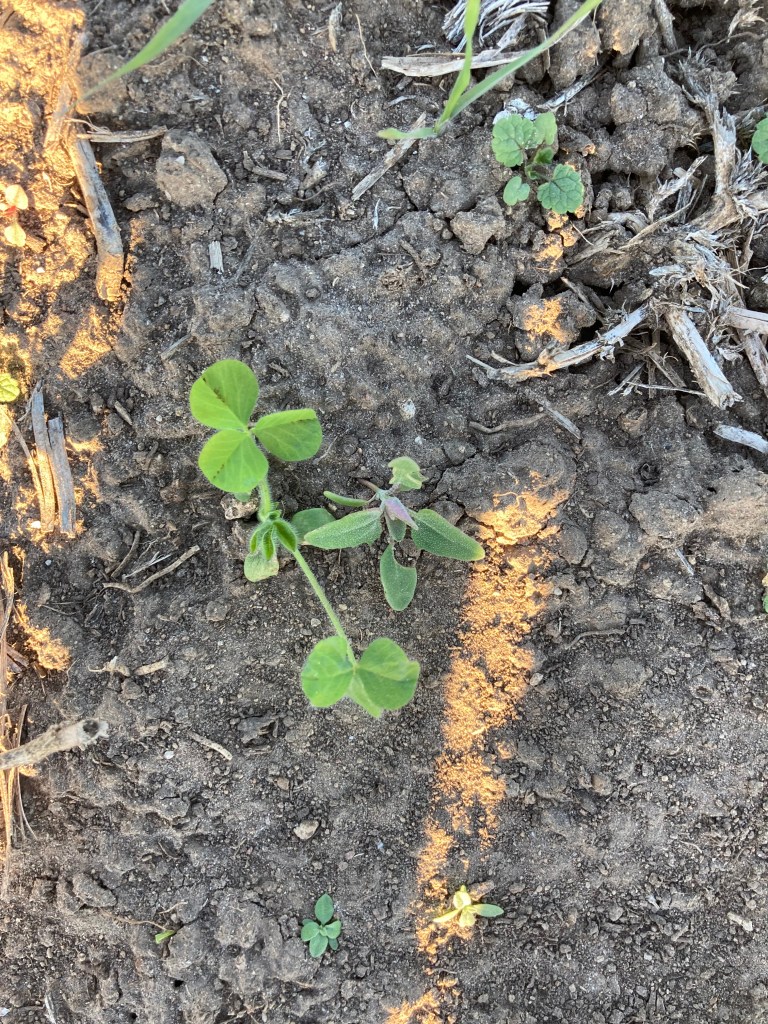
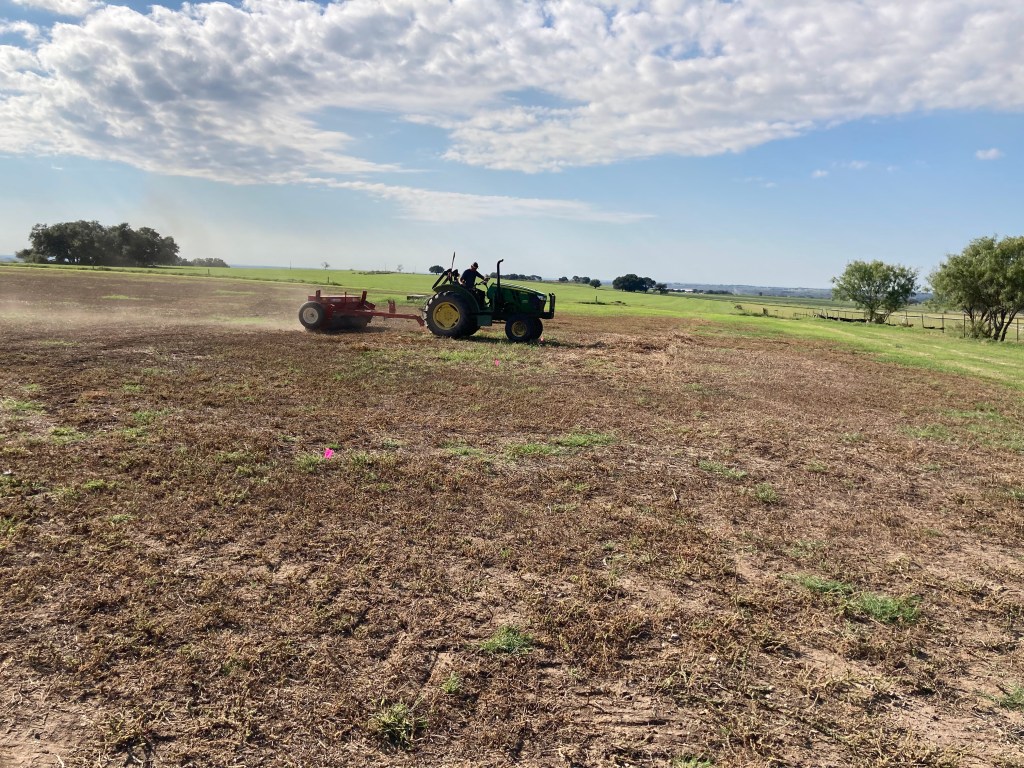
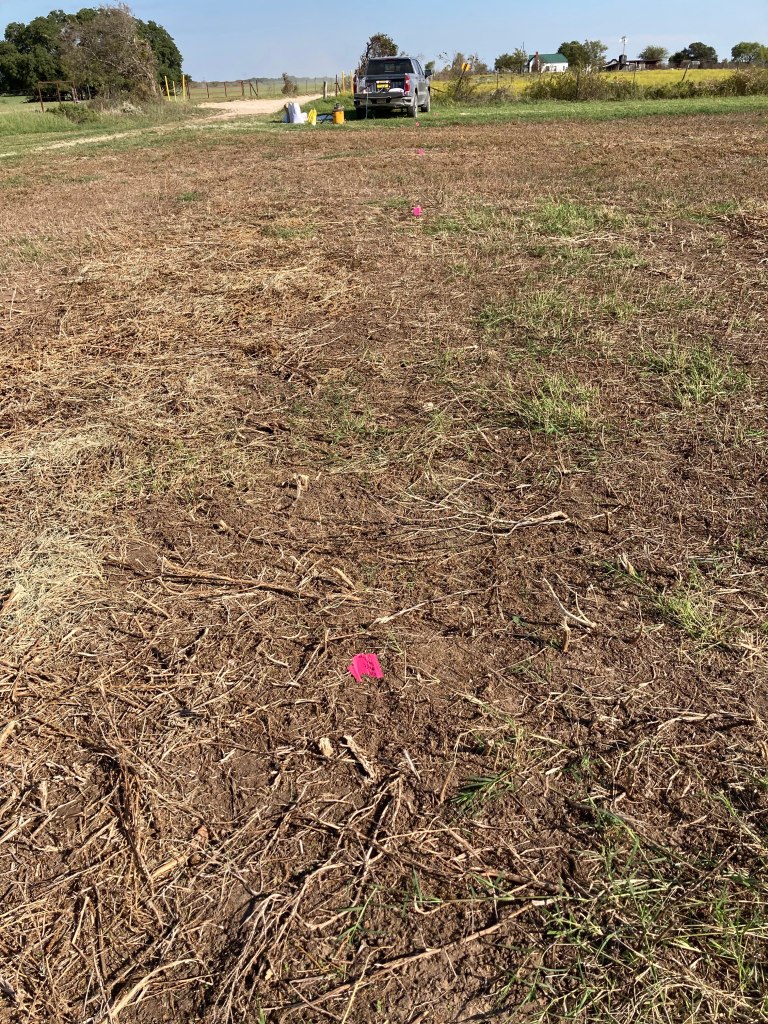
Okay, what does that have to do with little things making the day brighter? Well, we are working on a project with two organic grass fed dairies to improve forage quality which in turn will improve milk production and milk components. We are trying several new clovers in both an overseeded situation like the bermudagrass you see in 2 of the pictures above or in a bare field like the other two pictures above. These clovers were planted on October 22nd and we are just now seeing some seedlings emerge a month later. Sometimes it is nothing more than a little thing to make your day a whole lot brighter!

Central Texas Junior Dairy Consortium

Graduating Central Texas JDC Class!

On Tuesday, November 9th Horizon Dairy near Hico in Hamilton County was the host of the Central Texas Junior Dairy Consortium. Horizon Dairy is owned by David De Jong and family and all the family is very involved. It a super place to host the JDC and it was super weather for a day long program.

What is a Junior Dairy Consortium? It is simple a way to provide hands-on learning experiences to educate students about the job opportunities that are available in the dairy industry. The JDC covers topics like reproduction, cow nutrition, ration formulation, milking and milking procedures, record keeping, farming and farming equipment, and expected salaries and potential jobs in agriculture and dairying.

All the students got to meet with several local dairymen and dairy industry representatives, allowing them to gain insight on the dairy industry as a whole. The students were juniors or seniors in high school and some were headed to college soon but many were about to enter the job market. They were a great bunch of students and I can assure you they are more than competent to be our future leaders!

Planting Organic Winter Forage Crops

This is the time of year that our Organic Dairy Producers have been hard at it to get those winter forages planted. Most producers are overseeding their bermudagrass pastures with a small grains like oats or wheat. Some producers like to sling out ryegrass which comes up basically on top of the soil and some like to drill in some clover seed to get a high protein legume.

In this picture you can see we are using a Brillion seeder in a field that is basically bare ground. It was a field that had been sprigged earlier in the year but the sprigs just never got going. We are using the Brillion because clover seed is so small that it just falls through a typical grain drill.

In these pictures you can see both planting and the plots we put in of the different clovers with an alfalfa at the end of the plots. Plans are to monitor growth, do some harvests throughout the season and do a final harvest at maturity. These same varieties have been overseeded in a “mix” into several bermudagrass pastures and we can harvest them growing together to see both persistence of individual species and yields in an overseeded situation.

Legume Forage Trial – Postmus Dairy
Planted: October 22, 2021
2 passes per variety – 24′ wide total
4-5 lbs./ac. per variety
1. Medium Red Clover
2. Dixie Crimson Clover
3. Yellow Blossom Sweet Clover
4 Berseem Clover Frosty
5. Barduro Red Clover
6. Alfalfa GCS Nitro Graze

Stalk Rot in Organic Corn

High Plains Corn Field

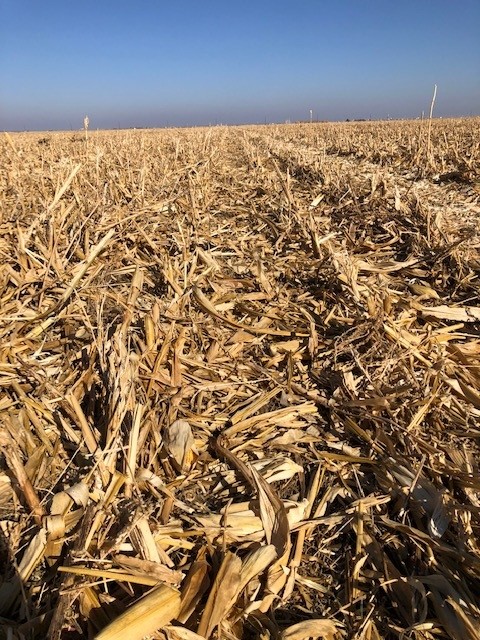
This may look like a “just harvested” corn field and it is, but with a very important difference. This field is suffering from a severe case of stalk rot!

What is stalk rot? It is a disease of the stalk that really shows up or let’s say, gets worse as the stalk is maturing or just before grain harvest. This disease can be the result of either a fungus or a bacteria infecting the plant, but getting worse as the plant goes through some sort of stress. That said, every year in almost every field of corn, there is stalk rot in some parts of the field. The disease is not hardly noticeable most years, but sometimes in some fields like this one, it can be almost 100% of the field.

According to a great publication (linked to at the bottom), “Stalk rot diseases tend to be more common in higher yielding hybrids that produce large, heavy ears. During times of stress, such as when foliar disease cause substantial loss of leaf area, these large ears may cannibalize carbohydrates from the stalk and weaken it.” Of course, a plant that is weakened but with heavy ears will lodge or fall over making harvest difficult or impossible.

If you look closely at the picture you can see that most of these plants and ears did not make it through the combine because they were already on the ground. One practice, to prevent as much loss, is to be scouting fields early, checking to see if stalks are weak or prone to break over. If there is significant damage starting to show up then harvest as soon as possible.

Unfortunately, or fortunately, this was a great corn year with great yields. This great year may have set up the plants for stress which allowed the fungi (probably fusarium) to invade plant stalks causing stalk rot. To read the publication from Nebraska Extension just click the box below.

Corn Plants are Different Now!

Of course, corn plants are different now, yields are higher, GMOs are a regular part of conventional corn breeding, there is even some natural resistance to insects or disease we never had.  But there are also some unintended consequences that researchers are just now discovering.

A research report published in March of this year is eye-opening especially for those in organic agriculture.  Basically, what these researchers did was to study if the corn breeding program have altered the recruitment of microorganisms to the rhizosphere of plants over time and with changes to the plant genotypes.

In as simple a language as possible they looked at 20 corn lines spanning the years 1949 to 1986.  This is the time when great advances were made in corn genetics, and they corresponded with the introduction of synthetic nitrogen into the corn production system.  What they were looking to investigate was whether the breeding program, conducted with plenty of nitrogen, bred superior corn yielding varieties, but without the necessary tools to recruit the rhizosphere microbiome that helps the corn plant to transform atmospheric nitrogen into nitrogen necessary for growth.

Past research has proven that plant microbiomes play a major role in altering plant resilience, fitness, nutrition, and productivity.  Plant hosts selectively filter microorganisms that colonize their rhizosphere, and this selection ability is inherited (or not) across the crossbreeding process.  So, if the breeders were only looking at yield, and they had plenty of nitrogen, then they may lose this beneficial rhizosphere microbiome recruitment process.           

 Okay, lots of information to take in, but the takeaway is – when we use varieties (possibly any crop) that has been developed for modern agriculture, that uses synthetic crop inputs, they will probably struggle in an organic system.  I do believe that conventional crop breeders will be looking to fix this issue, especially with high nitrogen prices, but it only emphasizes a need to have organic crop breeding programs that understand and use the plant/soil/microbiome interactions in plants.

If you would like to see the entire research report, “Maize germplasm chronosequence shows crop breeding history impacts recruitment of the rhizosphere microbiome,” just click the button below.

Grass Fed Organic Milk

As most in the Texas organic world know I have not been an organic specialist for Texas A&M AgriLife Extension long, and the learning curve about organic in Texas is an everyday thing!

Last June, Henk Postmus, a local organic dairyman (Stephenville/Dublin) and I had a long conversation about “grassmilk” also known as organic grass-fed milk. He wanted to know all about it because he believed it would work in Central Texas with our good pastures, rainfall, irrigation and warm climate. To be honest I knew about organic dairy products because I have known Henk a long time, but I didn’t know about grassmilk. That organic learning curve has been steep but fantastic!

First, grassmilk or grass-fed is organic because the first requirement to be a grass-fed dairy is to be organic. The second very basic requirement is that you cannot feed grain – any grain, at any time. All the feed has to be based on forages, whether grass (monocots) or dicots (clovers, turnips, alfalfa), and you cannot harvest a silage with the grain head (corn, sorghum, wheat). The other requirement is at least 150 days of grazing per year which is no problem in Texas.

Grassmilk does have several large research studies done in the US that shows it to be high on omega 3 fatty acid and much lower in omega 6 fatty acid which is supposed to be healthier for you. (click the link below for more info)

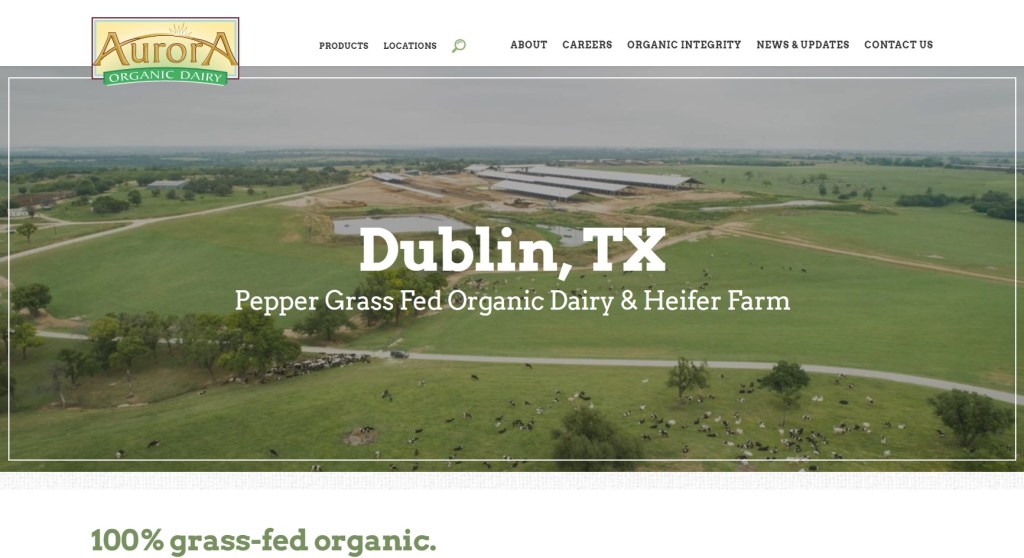
As I began checking into grass-fed dairies I heard a rumor that Aurora Organic had begun milking again at their facility near Dublin. I had stopped in a couple of times but had missed the manager. Finally I did connect with Dawn Dial, manager of the Pepper Dairy for Aurora (picture above) and I asked about grass-fed dairies and found out they have been grass-fed for nearly two years. Dawn is pretty enthusiastic about the whole process and I will have to say it is an interesting way to dairy. The milk is really good and the unique thing is that the flavors change based on the forages the cows eat.

Needless to say, Henk has been visiting with Dawn at the Aurora Pepper Dairy and with the Aurora Organic Dairy company to learn more. Considering the way grain commodities keep going up, especially organic grain, this may be a trend for more dairies.