
In my previous post, “New Organic HTS Codes for U.S. Imports and Exports,” I discussed how new organic-specific Harmonized Tariff Schedule (HTS) codes can improve our ability to identify and track organic products moving through international trade. Better identification gives USDA, the organic industry and researchers a clearer picture of what organic commodities are entering and leaving the United States.
But collecting better information is only useful if we actually use it.
A new USDA National Organic Program (NOP) Oversight and Enforcement Update, released August 26, provides a good example of how USDA is doing just that—combining electronic NOP Import Certificate data, Customs information, document reviews, targeted sampling and enforcement to identify questionable organic imports before they enter the U.S. organic marketplace.
Strengthening Organic Enforcement Changed Import Oversight
The USDA Strengthening Organic Enforcement (SOE) rule was fully implemented on March 19, 2024. Among its major changes, the rule greatly expanded organic certification requirements throughout the supply chain and made electronic NOP Import Certificates mandatory for nearly all certified organic agricultural products imported into the United States.
The NOP Import Certificate is much more than another piece of import paperwork. The NOP Import Certificate creates an electronic record that helps trace the organic product through the certified exporter and importer and identifies the commodity using the applicable HTS code.
USDA describes this as creating a certification “handshake across the border”—a certified exporter sending the product and a certified importer responsible for receiving it into U.S. commerce.
These records also give NOP a much greater volume of standardized import data that can be analyzed for unusual or potentially fraudulent trade activity.
According to USDA, NOP is now reviewing Import Certificate data to proactively identify suspicious shipments and combining that information with cooperation from U.S. Customs and Border Protection (CBP), documentation reviews, sampling and laboratory testing.
A 21-Ton Example at the Port of Long Beach
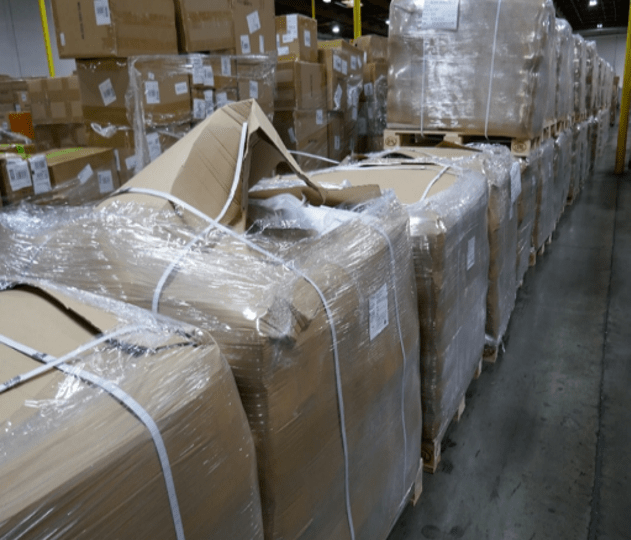
Photo: Fraudulent organic pea protein denied entry at the Port of Long Beach. USDA
USDA’s latest enforcement update provides a particularly interesting example involving organic-labeled pea protein for human consumption arriving at the Port of Long Beach.
NOP and CBP identified pea protein as a higher-risk commodity because of concerns about fraud within global supply chains and conducted targeted sampling and document reviews.
They found problems with two shipments.
One shipment displayed the USDA Organic seal but did not have a certified NOP importer or a valid NOP Import Certificate.
That is now a serious barrier to entry: effective October 1, 2025, USDA no longer allows certified organic shipments arriving without a valid NOP Import Certificate to be reconditioned after arrival so they can enter the organic market. Instead, USDA identifies reexport, destruction or, under specified conditions, donation as the available options.
A second shipment was sampled and tested positive for a prohibited substance, making the product ineligible for sale as organic.
USDA authorized CBP to detain and deny entry to both shipments. Altogether, more than 21 tons of pea protein were prevented from entering the U.S. organic marketplace.
But the enforcement did not stop at the port.
NOP subsequently oversaw suspension of the exporter’s organic certification. USDA reports that certifiers also increased oversight within the associated supply chain through additional sampling, supplier verification and monitoring of implicated handlers.
That last step may be just as important as stopping the individual shipments. Effective organic enforcement means following a problem backward through the supply chain to determine whether it represents an isolated shipment or evidence of a larger integrity problem.
HTS Codes and Import Certificates Work Together
This is where the connection to the new organic HTS codes becomes especially important.
U.S. Customs and Border Protection uses HTS codes to identify commodities entering the country through its Automated Commercial Environment, or ACE. The NOP Import Certificate also requires the appropriate 10-digit HTS code for the organic commodity being imported.
Not every organic commodity currently has its own organic-specific HTS code. When an organic HTS code does not exist, the corresponding conventional commodity code is used on the NOP Import Certificate.
That is why creating additional organic-specific HTS codes matters. The more precisely organic commodities can be identified within trade data, the easier it becomes to understand trade patterns and potentially identify unusual activity.
USDA is also now publishing annual organic import information derived from NOP Import Certificates, providing another source of data on organic products entering the United States.
In simple terms:
HTS codes identify the commodity and, where an organic-specific code exists, allow that organic product to be identified separately in U.S. trade data.
NOP Import Certificates establish the certified organic identity and traceability of imported products—even for commodities that do not yet have their own organic HTS code.
Customs information, certification records, document reviews, sampling and enforcement give USDA tools to determine whether those organic claims are legitimate.
Enforcement Goes Beyond Imports
The August enforcement update also provides some perspective on the broader work of the National Organic Program.
NOP reported receiving 755 complaints during 2025 involving potential violations of the organic regulations. Complaints included certified operations that may not have corrected noncompliances, operations suspected of selling more organic product than they could reasonably produce, and uncertified businesses making organic claims through labels, websites, social media or third-party online marketplaces.
Depending on the circumstances, USDA enforcement actions can include warning notices, civil penalties, suspension or revocation of certification, negotiated surrender of certification, publication of fraudulent organic certificates and referral to other state or federal law-enforcement agencies.
USDA also maintains an Organic Enforcement Activity webpage where the public can review settlement agreements, administrative decisions and fraudulent organic certificates.
Why This Matters to Organic Farmers and Handlers
Organic agriculture is unusual because organic is both a production system and a legally defined market claim.
Farmers and handlers invest considerable time and money complying with organic standards, maintaining records, undergoing inspections, protecting organic integrity and documenting the movement of products through the supply chain.
Fraudulent organic products do more than violate a regulation. They compete directly with legitimate organic farms and businesses that bear the cost of complying with those regulations.
That is why enforcement matters.
The Long Beach pea protein case does not mean that fraud has disappeared from organic supply chains, nor does it mean that every organic import is physically inspected or tested. Organic trade is far too large for that type of system.
What it does demonstrate is that USDA now has considerably better tools for risk-based enforcement—using Import Certificate data, certification records, Customs information, document reviews and targeted sampling to identify shipments or supply chains that deserve closer scrutiny.
There is also an important responsibility for organic handlers. Under Strengthening Organic Enforcement, businesses importing organic products into the United States generally must be certified, and certified operations must evaluate vulnerabilities in their supply chains and maintain appropriate fraud-prevention practices. The Import Certificate is therefore not simply a government enforcement tool; it is also part of the traceability system organic businesses use to verify the integrity of the products they buy and sell.
For farmers and handlers who have repeatedly asked whether USDA is actually checking imported organic products, the Long Beach case provides a useful example of the system working as intended.
The goal should not be to slow legitimate organic trade. The goal is to make it increasingly difficult for a product that does not meet USDA organic requirements to compete in the marketplace as organic.
And that protects everyone who has worked to earn the USDA Organic label.
More Resources
USDA Organic Insider – Oversight and Enforcement Update
Read the August 26, 2026 USDA enforcement update
USDA Strengthening Organic Enforcement
Strengthening Organic Enforcement rule and resources
Strengthening Organic Enforcement Frequently Asked Questions
Includes detailed information for organic importers, exporters and customs brokers.
USDA SOE Frequently Asked Questions
Electronic NOP Import Certificates
USDA information on electronic organic import certificates
Data on Imports of Organic Products
NOP now publishes import data derived from NOP Import Certificates in addition to organic trade data available through organic HTS codes.
USDA data on imports of organic products
Discover more from Texas A&M AgriLife Organic
Subscribe to get the latest posts sent to your email.

 Texas A&M AgriLife Organic