by Dr. Waltram Ravelombola1
Texas A&M AgriLife recently released one of the first organic guar varieties in the country: ‘TAMG 101’ and ‘TAMG 102‘.2 Even though guar might not be a popular legume, many of us have used guar products in various forms. Guar is a drought- and heat-tolerant legume. In the U.S., it is grown in Texas, New Mexico, Oklahoma, and Arizona.
Guar seeds have galactomannan, known as guar gum, which has multiple uses. It is used as ingredient in various food applications such as ice cream, dairy products, cheese, salad dressing, etc. The increasing demand in organic products using guar gum as food ingredients has significantly increased nationally. This requires the availability of organic guar in the market, necessitating the need for guar varieties adapted to organic production systems.
Therefore, these new organic guar varieties will be vital to provide domestically produced organic guar gum for the food industry. Guar can also fix atmospheric nitrogen, which is important in enhancing soil fertility in organic farming production.
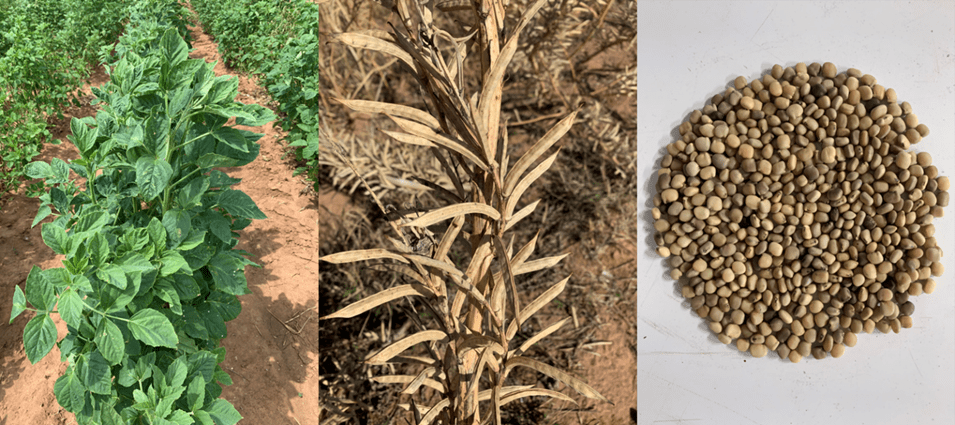
Figure 1. Plants and seeds of organic ‘TAMG 101’ (Ravelombola et al. 2025)
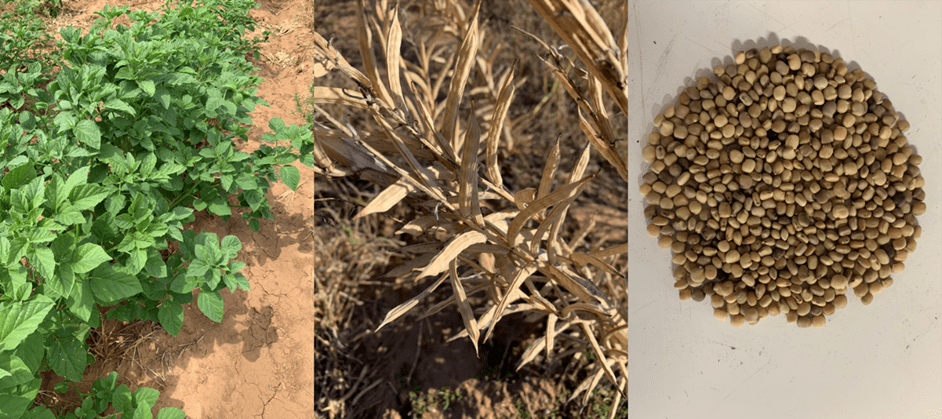
Figure 2. Plant and seeds of organic ‘TAMG 102’ (Ravelombola et al. 2025)
- Waltram Ravelombola, Assistant Professor, Organic & Specialty Crop Breeding, Texas A&M AgriLife Research, 11708 Hwy 70 S, Vernon, TX.
Email: waltram.ravelombola@ag.tamu.edu Phone: 940-647-3911
Ph.D. Agricultural, Food, and Life Sciences, University of Arkansas, 2020
M.S. Statistics and Analytics, University of Arkansas, 2020
M.S. Cell and Molecular Biology, University of Arkansas, 2017
M.S. Agricultural Engineering, University of Antananarivo, 2014
Professional Summary
Specialty: Organic and Specialty Crop Breeding
Research: My research focuses on developing specialty crop and row crop cultivars that are suitable to the organic cropping systems in Texas and beyond. The breeding program focuses on developing cultivars with acceptable yields, high nutritional values, good agronomic performance, and better tolerance to abiotic stresses such as heat, drought, and salinity, and biotic stresses such as pests and diseases. Our approach integrates conventional and modern tools in plant breeding. Research also focuses on understanding the genetic basis of abiotic and biotic stresses in specialty crops (guar, cowpea, lentils…). Research topics also include genomic selection and high-throughput phenotyping.
Support Staff and Students: Aurora Manley, Philip Hinson, Caroline Ruhl ↩︎ - Ravelombola, W., Manley, A., & Stephens, S. (2025). ‘TAMG 101’ and ‘TAMG 102’: New Organic Guar for the Southern United States. HortScience, 60(11), 1957–1958. https://doi.org/10.21273/HORTSCI18007-24 ↩︎

Discover more from Texas A&M AgriLife Organic
Subscribe to get the latest posts sent to your email.

 Texas A&M AgriLife Organic