
Click a link below to scroll down!
- Oats: The Nutrient-Rich Grain for Food, Forage, and Soil Improvement
- Advantages of Growing Oats as Grain
- Advantages of Growing Oats for Grazing
- Advantages of Growing Oats for Silage
- Oat Seed Count and Weight
- Planting Rate
- Planting Depth
- Additional Considerations
- Overall Benefits
- Seed Companies
- Organic Small Grain (wheat, oats, triticale, barley, and rye) Traders
- Other Resources
Oats: The Nutrient-Rich Grain for Food, Forage, and Soil Improvement
Organic oat production plays a vital role in sustainable agriculture, offering a high-nutrient, low-input crop that supports both human and environmental health. Oats are often grown in organic systems for their ability to improve soil structure, suppress weeds, and add valuable organic matter. They are particularly prized for their high fiber and beta-glucan content, making them a staple in the health food market. Organic oats appeal to consumers looking for pesticide-free, nutrient-dense food options, while their production helps farmers reduce chemical dependencies and maintain ecological balance. By prioritizing organic oat cultivation, producers can tap into a growing market for clean, wholesome grains while promoting regenerative farming practices.
Food Use: Oats are a popular grain used globally in a variety of foods, especially breakfast items like oatmeal, granola, and muesli. They are known for their high nutritional value, being rich in soluble fiber, particularly beta-glucans, which help lower cholesterol levels and regulate blood sugar. Oats also provide a good source of carbohydrates, protein, healthy fats, and essential nutrients such as iron, magnesium, and B vitamins. They are often processed into different forms, including rolled oats, steel-cut oats, and oat flour, which are used in baking, snacks, and health foods.
Animal Feed: Oats are a highly valued feed grain, especially for horses, cattle, and poultry. They are known for their palatability and digestibility, providing a good balance of energy, fiber, and protein. The relatively high fiber content in the hulls of oats makes them a preferred choice for young animals and those with specific dietary needs, such as horses and lactating livestock. Oats are also less likely to cause digestive upsets compared to higher-starch grains like corn, making them a safer feed option for many animals. They can be fed whole, rolled, or ground, depending on the specific requirements of the livestock.
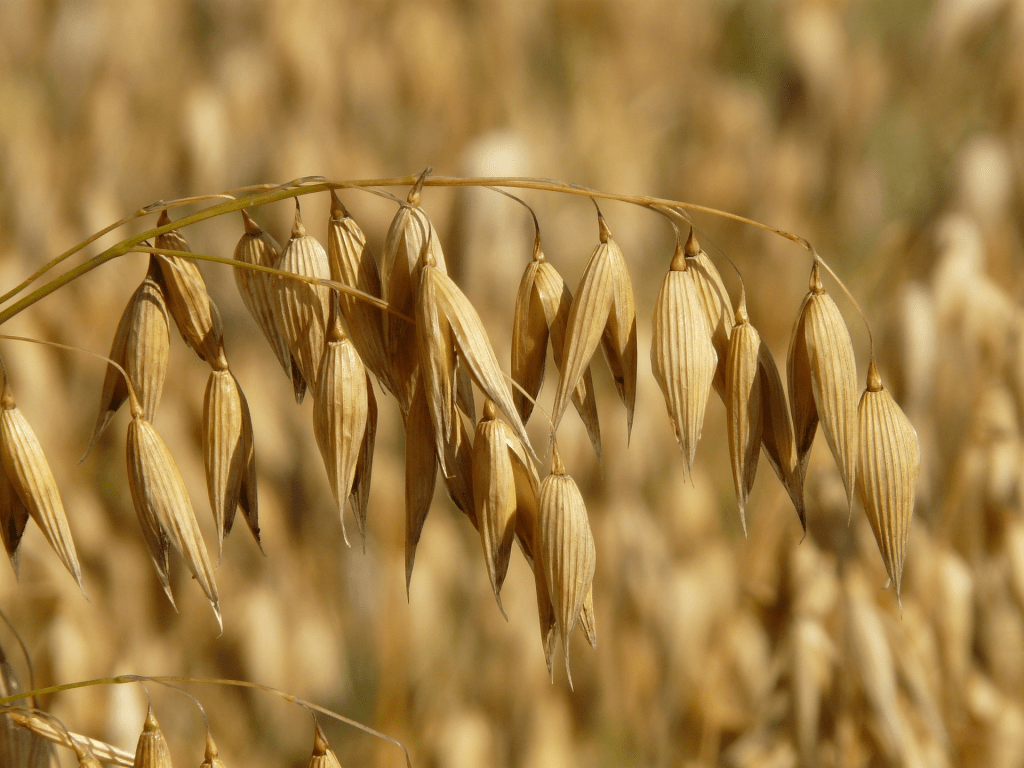
Advantages of Growing Oats as Grain
- High Nutritional Value: Oats are known for their high nutritional content, including a good balance of protein, carbohydrates, and fats. They are particularly high in soluble fiber, especially beta-glucans, which help lower cholesterol and regulate blood sugar levels. Oats are commonly used in human foods such as oatmeal, breakfast cereals, and baked goods.
- Market Demand and Health Benefits: There is a strong market demand for oats due to their recognized health benefits, including heart health, digestive health, and as a gluten-free alternative (though oats can be contaminated with gluten unless specifically grown and processed as gluten-free).
- Adaptability to Different Climates: Oats are highly adaptable and can thrive in cool, moist climates. They are well-suited to regions with shorter growing seasons and can perform well on a variety of soils, including those that are less fertile or have higher moisture levels.
- Soil Improvement: Oats contribute to soil health by enhancing soil structure, increasing organic matter, and providing ground cover that reduces erosion. Their fibrous root system helps improve soil tilth and water infiltration.
- Low Input Requirements: Oats generally require fewer inputs such as fertilizers and pesticides compared to other cereal crops, making them a cost-effective option for farmers, particularly in organic or low-input systems.
Advantages of Growing Oats for Grazing
- High-Quality Forage: Oats provide high-quality forage that is rich in protein and energy, making them an excellent choice for grazing livestock, especially when grazed in the early vegetative stages. This forage is particularly beneficial for young or lactating animals.
- Extended Grazing Season: Planting oats in the fall or early spring can extend the grazing season, providing valuable forage when other pastures are not available. This can reduce the need for supplementary feeding.
- Rapid Growth and Regrowth: Oats grow quickly and can provide forage within a short period after planting. They can be grazed multiple times if managed correctly, supporting continuous grazing systems and reducing feed costs.
- Palatability and Digestibility: Oat forage is highly palatable to livestock, which can improve intake and animal performance. Its high digestibility supports efficient nutrient utilization in grazing animals.
Advantages of Growing Oats for Silage
- Nutritional Silage: Oat silage offers a good balance of carbohydrates, proteins, and fiber, making it a valuable feed for ruminants such as dairy cows, beef cattle, and sheep. The high energy and digestibility of oat silage contribute to enhanced animal performance, particularly in high-demand situations like lactation.
- Early Harvest and Flexibility: Oats can be harvested for silage earlier in the season, which allows for double-cropping or the planting of cover crops afterward. This can maximize land use efficiency and enhance overall farm productivity.
- High Biomass Production: Oats produce a substantial amount of biomass, resulting in high yields of silage per acre. This makes it a productive option for livestock feed, particularly in regions where forage supply is critical.
- Tolerance to Poor Growing Conditions: Oats are relatively tolerant of poor growing conditions, including cold, wet soils and low fertility, making them a reliable option for silage production in diverse environments.

Oat Seed Count and Weight
- Seeds per Pound: The number of oat seeds per pound generally ranges from 12,000 to 16,000 seeds per pound, depending on the variety and seed size. An average figure is around 14,000 seeds per pound.
Planting Rate
- Typical Planting Rate: The standard seeding rate for oats is typically 80 to 100 pounds per acre. This equates to approximately 1.1 to 1.6 million seeds per acre, depending on seed size and germination rates.
- Range of Planting Rates:
- For Grain Production: Rates usually range from 70 to 100 pounds per acre.
- For Forage or Cover Crop Use: Higher seeding rates, ranging from 100 to 130 pounds per acre, are often used to ensure a dense stand for forage quality or ground cover.
- Erosion Control or Soil Health: For purposes like erosion control or as a nurse crop, seeding rates might reach up to 130 pounds per acre.
Planting Depth
- Optimal Depth: Oats should be planted at a depth of 1 to 2 inches. Planting depth considerations include:
- 1 inch is generally adequate under moist conditions and lighter soils.
- 1.5 to 2 inches may be needed in drier conditions or in heavier soils to ensure good seed-to-soil contact and moisture access.
- Depth Considerations: Planting too shallow may expose seeds to surface drying or adverse weather, while planting too deep can delay emergence and reduce stand uniformity.
Additional Considerations
- Soil Temperature: Oats can germinate at cool soil temperatures, with the optimal range being 50°F to 77°F (10°C to 25°C). They can be planted in early spring or late summer for fall production.
- Row Spacing: Oats are typically planted with row spacing of 6 to 8 inches for grain, and sometimes closer spacing for forage or cover crop purposes.
- Uses: Oats are versatile and used for grain, forage, and cover cropping. As a cover crop, oats help improve soil structure, suppress weeds, and capture residual nitrogen.
Overall Benefits
- Weed Suppression and Cover Cropping: Oats are effective at suppressing weeds due to their rapid growth and dense canopy. They are also commonly used as a cover crop to improve soil health, prevent erosion, and reduce weed pressure in subsequent crops.
- Disease Resistance and Pest Management: Oats are generally less susceptible to some of the diseases and pests that affect other cereal grains, reducing the need for chemical interventions and supporting integrated pest management strategies.
Seed Companies
Organic farmers are required to purchase organic seed when it is available, but for many crops, organic seed options are limited or unavailable. Many seed companies offer both organic and non-organic seed, and it’s essential for farmers to understand that non-organic seed can be used on certified organic farms as long as it is non-GMO and untreated. Farmers should always verify seed sourcing requirements with their organic certifier to ensure compliance while balancing the need for high-quality planting seed.
Turner Seed Company
- 211 County Road 151
- Breckenridge, TX 76424-8165
- 800-722-8616
- Website: www.TurnerSeed.com
- J. Mercer – Sales
- j@turnerseed.com
- Jesse Speer – Sales
- jesse@turnerseed.com
- Blair Vick – Sales
- blair@turnerseed.com
- Luke Turner – Sales
- luke@turnerseed.com
- Darcy Turner – Agronomist
- darcy@turnerseed.com
Albert Lea Seeds (Organic Varieties)
- 1414 West Main Street
Albert Lea, MN 56007 - 1 (800) 352-5247
- seedhouse@alseed.com
- https://alseed.com/
Trical Superior Forage
- 701 Dewey Blvd #4248
- Butte, MT 59701
- 406-498-0790
- Drew Morano
- Central US Senior Commercial Lead
- 970-214-3642
- dmorano@tricalforage.com
Organic Small Grain (wheat, oats, triticale, barley, and rye) Traders
Here is a list of potential organic commodity buyers (based on organic certification) who have historically engaged in the organic grain market. While these companies have shown interest in organic commodities, it’s important to note that their purchasing activities can vary based on market conditions, demand, and availability. I encourage you to contact them directly to inquire about their current buying needs and contract opportunities, as their purchasing intentions may change over time.
Barton Springs Mill, Inc.
- James A. Brown
- 16604 Fitzhugh Rd., Unit B
- Dripping Springs, Texas 78620
- 512-554-5981
- james@bartonspringsmill.com
- https://bartonspringsmill.com/
Pink Rose Organix
- John Conboy
- 180 Railroad Ave
- Slaton, TX 79364
- 916-941-9288
- 209-275-3002
- john@americanriverag.com
- https://www.pinkroseorganix.com/
Caprock Enterprises LLC
- Beau Brown
- 1301 E 5th
- Plainview, Texas 79072
- PO Box 53538, Lubbock, Texas 79453
- 806-798-8900
- beau@lonestarcom.org
Commodity Brokerage Services LLC
- Blake Stringer
- 149 South Shore
- Amarillo, Texas 79118
- (806) 676-4888
- cbsllc2019@gmail.com
Coyote Creek Organic Feed Mill & Farm
- Jenny Myers
- 13817 Klaus Lane
- Elgin, Texas 78621
- 512-285-2556
- jenny@coyotecreekfarm.com
- https://www.coyotecreekfarm.com/
Deaf Smith County Grain
- Dan Bornemeier
- PO Box 1729
- Dalhart, Texas 79022
- 806-384-3377
- d.bornemeier@cottonwoodcattle.com
Enger Farms, LLC
- Jerod Crawford
- 3056 County Rd 902
- Joshua, Texas 76058
- (817) 790-2368
- engerfarms@gmail.com
Lone Star Commodities, Ltd.
- Beau Brown
- PO Box 53538
- Lubbock, Texas 79453
- 806-798-8900
- beau@lonestarcom.org
McDowell Feed Source
- Linda McDowell
- 508 S ELM ST
- Hico, Texas 76457
- 707-695-7805
- mcdowellfeedsource@gmail.com
Muleshoe Specialty Grain, LLC
- Jimmy Black
- 810 FM 3269
- Muleshoe 79347
- 806-965-2447
- boehninggroup@gmail.com
New Deal Grain Inc
- Seth Fortenberry
- Peter Poff
- 501 East Main Street
- New Deal, Texas 79350
- P O Box 265
- New Deal, Texas 79350
- 806-784-2750
- peter@newdealgraininc.com
- https://newdealgraininc.com/
TIERRA MANNA TRADING
- Michael Ethan Black
- PO Box 51991
- Amarillo, Texas 79159
- (806) 471-7826
- mebtrading.organics@gmail.com
Triple Nickel, Inc.
- Kayla Nickels
- 808 W 19th St
- Muleshoe, Texas 79347
- Triple Nickel East
- 413 East American Blvd.
- Muleshoe, TX 79347
- (806) 272-7500
- Triple Nickel West
- 1680 CR 1044
- Muleshoe, Texas 79347
- (806) 272-5589
- kayla@cknickels.com
- https://cknickels.com/
Other Resources
- Organic Wheat Resources
- Organic Rye Resources
- Organic Triticale Resources
- Organic Barley Resources
- 2025 Small Grain Forage Tests
- Weed Control Performance of Different Sowing Methods in Organic Wheat
- Can Cover Crops Control Weeds and Save Water Too
- Article: Get the most from small grain silages
- Organic Weed Control
- What is the True Cost of Compost (or manure) in 2024?
- Soil Testing, soil results, soil test labs
- Organic Fertilizer – what is it, what are the rules, and where do you buy it?
- Organic Materials/Products Lists
- Best Cover Crops for Weed Control and Fertility
- Allelopathy – What is it, what has it, and how do we use it?
- Organic Seed May Soon Be Required

Discover more from Texas A&M AgriLife Organic
Subscribe to get the latest posts sent to your email.

 Texas A&M AgriLife Organic