
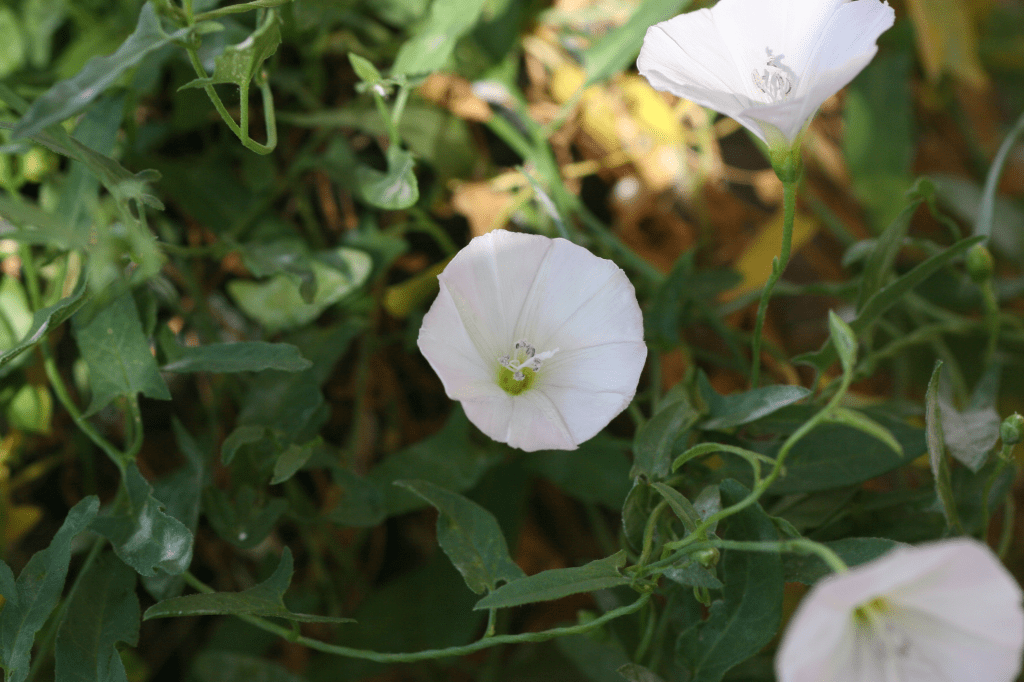
In a Review Article written for Renewable Agriculture and Food Systems, authors Kathleen Delate, Ben Heller and Jessia Shade looked at many issues related to organic cotton. This study started by surveying organic cotton producers and processors to document specific approaches and techniques used in organic cotton production and processing, the environmental impacts of those techniques and challenges facing organic cotton growers.
From this study and related to field bindweed, sixty percent of the respondent’s noted weeds as the most critical pest management issue and 90% cited weed management within the three highest-ranked constraints. Among the weeds cited within organic cotton fields were (in order of abundance): bindweed, pigweed, lakeweed, Johnson grass, morning glory, nutgrass and crabgrass.
The most abundant and most difficult to control in organic cotton fields is field bindweed. I regularly get taken to fields to investigate the growing problem and discuss control options. I am putting together this blog post to bring together all that I can find related to organic field bindweed control.
Click a link below to scroll down!
- Biology and Spread
- Range of the Plant
- Invasiveness
- Mechanical Control Methods
- Solarization
- Cover Crops
- Grazing Animals
- Biocontrols
- Here is a brand new one with the title – “Signal, Not Poison—Screening Mint Essential Oils for Weed Control Leads to Horsemint”
- Soil Fertility and Soil Testing? “When Weeds Talk”
- Conclusion
Biology and Spread
Field bindweed, scientifically known as Convolvulus arvensis, is a vine in the Convolvulaceae (morning glory) family. It is found growing in moist thickets, fields, lawns, agricultural fields, and disturbed areas. The plant is known for its tendency to grow in a messy trailing or twining manner, forming tangled dense mats. It is tolerant of poor soils and drought and prefers full sun. The plant is cold tolerant and easily outcompetes native plants, field crops, alfalfa, and even some grasses. The plant has arrowhead-shaped leaves that can be 1/2 to 2 inches long. The flowers are trumpet-shaped, 1–2.5 cm in diameter, white or pale pink. See Video #1 below for a great description and pictures.
Field bindweed reproduces by seed and vegetatively from deep creeping roots and rhizomes. Most seeds fall near the parent plant, but some seeds may disperse to greater distances with water, agricultural activities, and animals. Seeds are hard coated and can survive ingestion by birds and other animals. Most seeds can imbibe water and germinate 10-15 days after pollination but, seed coats mature 15-30 days after pollination, and ~ 80% of seeds become impermeable to water (helping them survive). Impermeable seeds require scarification or degradation of the seed coat by microbial action to imbibe water and germinate. Seeds germinate throughout the growing season, but peak germination usually occurs mid-spring through early summer. Germination can occur under various temperature regimes, from 41o-104oF, but is highest and most rapid when temperatures fluctuate from 80o-90oF. A 3–6-week period of chilling to ~ 40oF appears to increase germination. Light is not required. A large portion of the seed bank remains dormant from year to year. Under field conditions, seed can survive for 20 years or more. A high percentage of seed under dry storage can survive for at least 50 years. Seed production is highly variable from year to year and even areas of a field. Dry, sunny conditions and calcareous (high pH with white rock) soils favor seed production. Frequent cultivation, rain, or heavy, wet soils can inhibit seed set. One plant can produce up to 500 seeds. In the field, young plants seldom produce seed the first season. Root starch reserves are highest from mid-summer through early fall, but then decline rapidly with conversion to sugars. Root carbohydrates are lowest in mid-spring before flowers develop. Maximum translocation of carbohydrates from shoots to roots occurs from the bud to full flower stages. Conditioned roots can survive temperatures as low 20oF. Most new shoots appear in early spring. Undisturbed patches can expand their radius up to 3o feet per year. Root fragments as small as 2 inches can generate new shoots.
Range of the Plant
Field bindweed is native to northern Africa, Europe, and Asia, where its distribution extends north to Siberia and south to Pakistan and Nepal. It has been introduced to North and South America, Australia, and New Zealand. It is widespread in the United States, except for some southern states. Let’s just say that it is all over Texas including the South Texas Winter Garden and Rio Grande Valley, the Blacklands of Central Texas, the Coastal Prairies, the Rolling Plains, South Plains and High Plains. I have seen very little in the sandy soils of East Texas which is a real blessing for them!
Invasiveness
Field bindweed is recognized as being invasive in North America. It is considered an invasive and noxious weed in 35 States, mostly in the west and Midwest from Michigan to California. It spreads by seeds, roots, and rhizomes and has an extensive root system making it very difficult to eradicate. Field bindweed is considered one of the most noxious weeds of agricultural fields throughout temperate regions of the world and is listed in Texas by the Texas Department of Agriculture as an invasive species.
Mechanical Control Methods
Mechanical methods include hand pulling seedling or young adult stage plants. Hoeing, tilling, or cultivation can be effective but need to be repeated every two weeks during the growing season. Mowing has not been an effective management tool and burning has limited effect. Deep, repeated cultivation has been shown to reduce field bindweed infestations. Intensive cultivation controls new seedlings and young plants but may spread roots and rhizomes and so has to be repeated often. Control can be obtained by tilling eight to twelve days after each emergence continuously throughout the growing season. If done frequently, this will starve the roots and rid the area of new seedlings. Tilling should be at least four inches deep. Planting fields in row crops and doing typical cultivation between rows is not sufficient for controlling field bindweed. In rows, plants can grow enough to cover the normal crop and certainly prohibit harvest.
Solarization
Soil solarization involves covering wet soil by moistening, rototilling, and then covering the infested soil with six mil clear plastic during the hottest, sunniest time of the year (for four to eight weeks) with sheets of clear plastic during the summer. This method can be useful only in areas with hot summers and in fallow fields. Soil solarization is not very satisfactory against established field bindweed but it has been shown to kill the seeds of the weed. To be most effective gardeners should remove the plastic and repeat the process of watering and tilling and reapplying the plastic. This ensures seeds in the soil germinate and that root pieces get exposed to heat.
Cover Crops
Cover crops can control field bindweed with competition by maintaining a healthy cover of thick tall plants. Summer cover crops like sorghum sudangrass, millet, and sunn hemp are all tall, rapidly growing species to get ahead of the field bindweed and shade it out. Field bindweed requires full sun to grow and reproduce. Without proper photosynthesis, the root storage of carbohydrates is depleted, and the plant shrinks in size. Depending on the amount and extent of field bindweed will determine the number of years that cover crops must be planted to reduce or eliminate field bindweed. Growing tall cover crops each summer and using winter grain crops as the primary field crop is a good rotation for suppressing field bindweed.
In the research article, “Crop rotation and cultivation effects on Convolvulus arvensis population dynamics in small grain organic cropping systems.” Authors Kara Hettinger, Zach Miller, Kyrstan Hubbel, and Tim Seipel took a look at all kinds of systems for controlling field bindweed but one of the best was breaking the regular cropping cycle and planting perennial alfalfa.
“The competitive ability of alfalfa with perennial cropland weeds has been well-documented (Meiss et al., 2010; Tautges et al., 2017a; Favrelière et al., 2020), but in this paper we show that it can be used successfully for weed management in organic cropping systems. Integrating an alfalfa phase into conventional small grain cropping system can suppress perennial weeds better than continuous cereal crops (Ominski et al., 1999). In organic systems specifically, Grosse et al. (2021) demonstrated that the choice of a perennial alfalfa-grass crop rotation was the most important factor for managing perennial weeds. Our results suggest that incorporating competitive perennial crops, particularly alfalfa, can effectively prevent the growth of C. arvensis populations.” I would have not suggested alfalfa as a crop to help control field bindweed, but their research is a little overwhelming in results!!
Grazing Animals
I have used livestock to help control field bindweed in numerous fields. You have to keep them on it and graze heavily, but I know it works. Grazing by sheep, cattle, hogs, and chickens will suppress aboveground growth and thereby help deplete storage reserves in the roots. Sheep, cattle, goats, and hogs will eat the leaves, stems, and may expose roots and crowns. Intensive grazing, allowing for regrowth, intensive grazing, allowing regrowth, etc. will help to deplete carbohydrate root storage, keep the plant from seeding and eventually eliminate a majority of the plants. Ruminant animals in particular seem to like field bindweed and will favor it even over legumes in the same pasture. I have seen dairy heifers kept in a 70-acre bindweed infested former corn field planted to small grain just wipe out bindweed in one season. It started back the next year from seed but a repeat with the heifers took out the seedlings. Grazing works!
Biocontrols
There are two insects that are used in the Great Plains: the bindweed moth (Tyta luctuosa) was released in Arizona, Iowa, Missouri, Oklahoma, and Texas and the bindweed gall mite (Aceria malherbae) was released in Texas, but I have not been able to find out where in Texas. It is not in the fields I have looked at but maybe you can look at all the pictures in the blogs and find it in your fields.
Aceria malherbae, the field bindweed mite, is a common biological control agent for the control of field bindweed. Mites cause galling of leaves and reduce flowering of field bindweed. This mite does prefer dry, arid soils and seems to be difficult to impossible to establish in high humidity. Mites can be collected from fields where it is established and moved to new infested fields. Video #2 below is an excellent discussion of both starting an insectary for future establishment and how to move the mites around. Video #3 below is just a neat video showing mites feeding. Also, you can click on this website from New Mexico about the Gall Mite and see the video and lots of great pictures. Really Good Site about the Gall Mite Here is a publication with a good description of releasing mites. Releasing Gall Mites
Click here to order Gall Mites: Colorado Department of Agriculture Biocontrol Insectary
The use of Tyta luctuosa (click here for an image), a moth in the family Noctuidae, as a biological control agent for field bindweed is currently under research. The majority of the damage to field bindweed comes from the larval stages of T. luctuosa (click here for an image) feeding on the leaves and flowers of the plant. The problem with this caterpillar is that it is hard to get number high enough to keep the field bindweed eaten down after they move through a field. They are not aggressive like armyworms!
Here is a great 2-page publication from Colorado on both insects for biocontrol. Biological Control of Field Bindweed
There has been some research on a fungus to infect field bindweed and as a disease to cause the plant to die. Phomopsis convolvulus spores and fungal parts are mixed with water to spray the field bindweed plant with some success. The plants need to be young to see the greatest effect, but repeated applications did reduce the population upwards of 80%. (past blog story on this fungus) Probably even better they took a Phomopsis convolvulus granular formulation and applied it to the soil and then incorporated the granular formulation into the soil. This incorporation reduced above ground biomass 90-100%. So far, I have not found a source for the fungus to even experiment on a field, but it is a work in progress!
Here is a brand new one with the title – “Signal, Not Poison—Screening Mint Essential Oils for Weed Control Leads to Horsemint“
This research project is from Europe but is very interesting. Here is a link to the study results. Horsemint Oil for Weeds
Weed control tries to suppress competitors for a crop and often relies on differential intoxication, making use of differences in uptake, development, or metabolism. We explored the possibility of using natural signals to shift competition in favor of the crop. Using the competitive horsemint (Mentha longifolia) as a paradigm, we showed that essential oils from certain mint species suppress the seedling development of different target species in a specific and efficient manner. The specificity concerned both the donor and the receptor. We demonstrated further that the effect of horsemint oil was specific for actin filaments, and not for microtubules. Since the elimination of actin will impair auxin transport, which is essential for root regeneration in vegetatively propagating weeds, we tested the efficacy of horsemint essential oil in combination with a slow-release carrier against field bindweed (Convolvulus arvensis), a pertinent weed in organic cereal production. We observed that the development of this weed can be specifically blocked, especially if the carrier is worked into the soil. We propose that allelopathic interactions, often relying on manipulative chemical signaling, harbor significant potential for organic weed control.
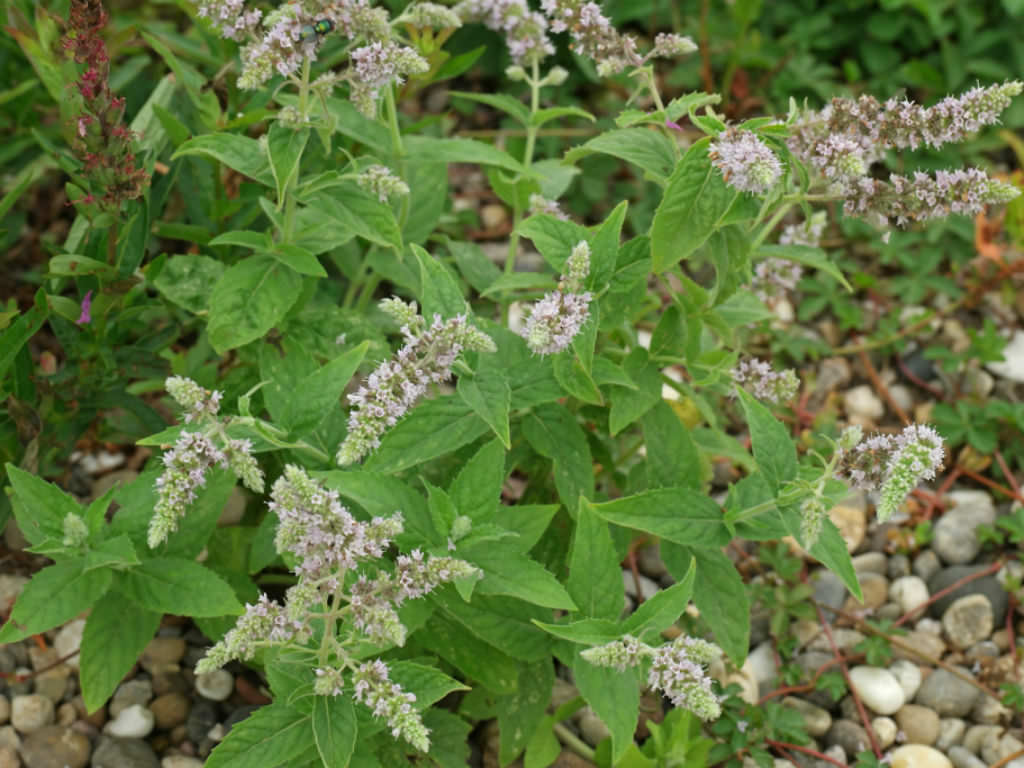
Horsemint (Mentha longifolia)
Soil Fertility and Soil Testing? “When Weeds Talk”
Jay McCaman is the author of “When Weeds Talk,” one of the most popular books of all time on Acres USA website. “When Weeds Talk” provides a comprehensive list of weeds and the soil conditions that enable those weeds to grow. Jay amassed almost 20,000 note cards cataloging research that’s been done to uncover the weed soil connection. In his book he has information on field bindweed and has observed that this weed is worse in fields with low calcium, low phosphorus, high potassium, high magnesium and probably low manganese. His recommendation is to try correcting these problems in the soil first to take away the good growing conditions for field bindweed. Anybody tried this? Let me know.
Conclusion
Field bindweed is a persistent and invasive weed that poses significant challenges for control and management. While mechanical methods and grazing can provide some level of control, they are often not sufficient on their own. Biocontrols like Aceria malherbae show promise, but more research is needed to fully understand and utilize how to use them in Texas. I am also interested in the fungus for field bindweed control and have seen fungi work on other weeds very effectively. This fungus is found just about everywhere but we need to grow it and get high numbers to make it work. Despite these challenges, ongoing research and integrated management strategies continue to provide new insights and tools for managing this resilient weed in Texas organic crops.
Lastly, you could look at field bindweed as just a new crop to harvest with lots of potential benefits to you and to the consumer. This lady is looking on the positive side of this “cancer” of fields and noting field bindweed’s potential to cure cancer!
Discover more from Texas A&M AgriLife Organic
Subscribe to get the latest posts sent to your email.

 Texas A&M AgriLife Organic
4 thoughts on “Organic Control of Field Bindweed?”