I was recently asked to give a presentation on Organic Weed Control to the Texas Weed Information Group or TWIG. This is a statewide or bigger group that is focused on weed identification, weed issues, weed control, weed anything! This group has over 300 members from researchers to Extension Specialists and Agents to consultants to farmers and is a great way to get smart folks together to work on a problem…. I only had 10-15 minutes to get it done as most speakers had but I had a great time being there and even thinking through what I would say. I started off with this —-
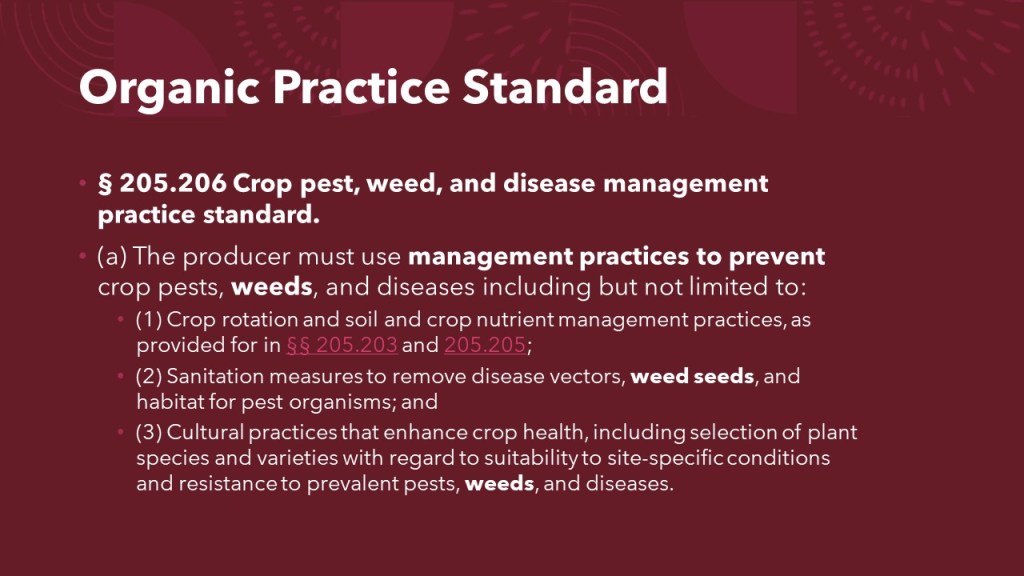
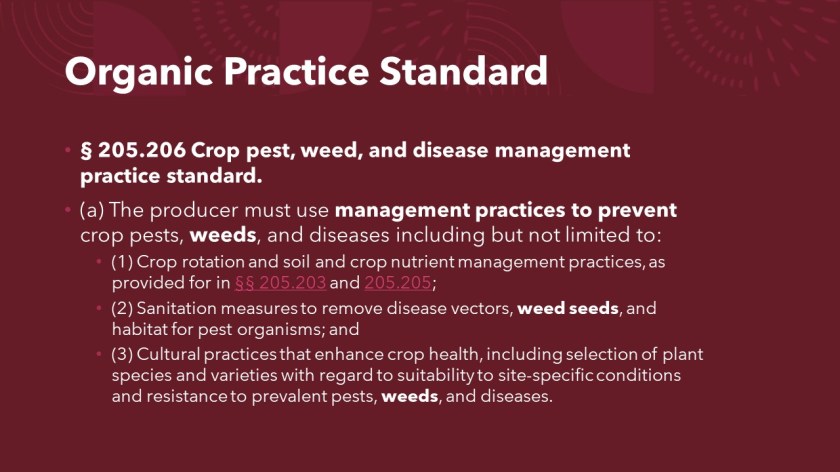
Anyone in organic knows that you follow the rules, and the first rule is to prevent weeds in organic if possible.
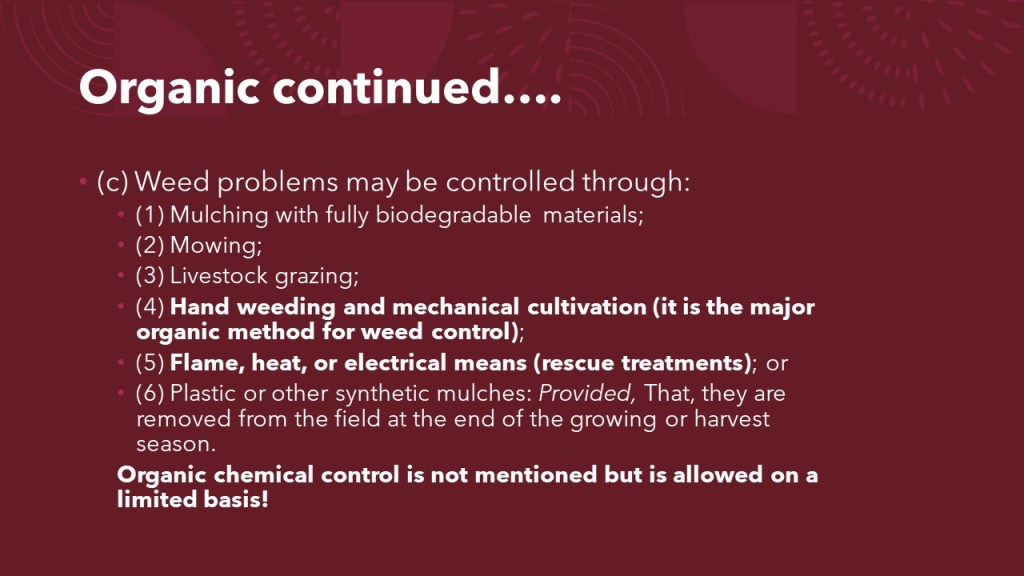
Also, in organic we can do cultivation and we do! This is what farmers have done for centuries but has been forgotten in just a few decades. (Great Publication on Blind Cultivation of Early Season Weeds) Just click that link to see it!
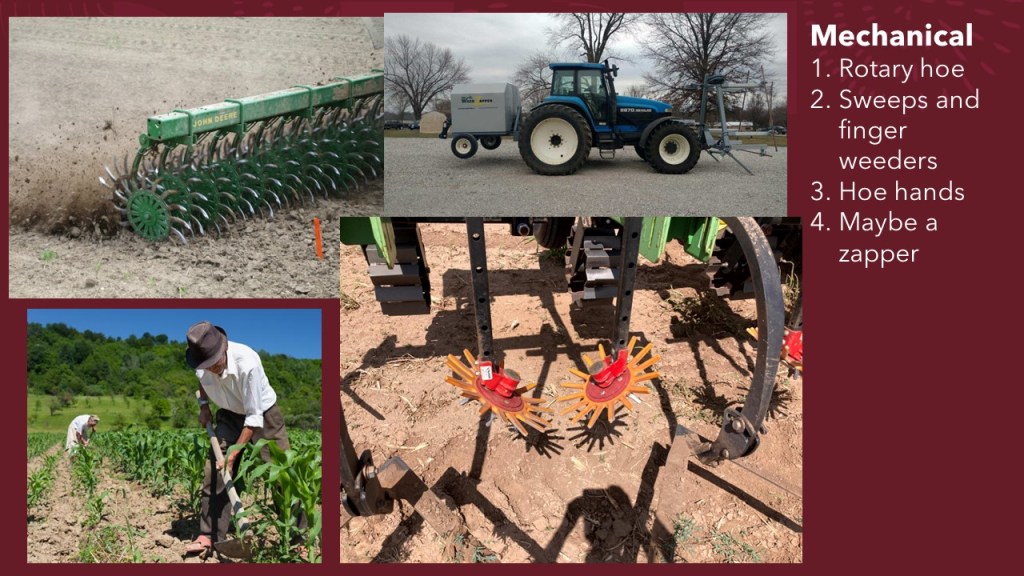
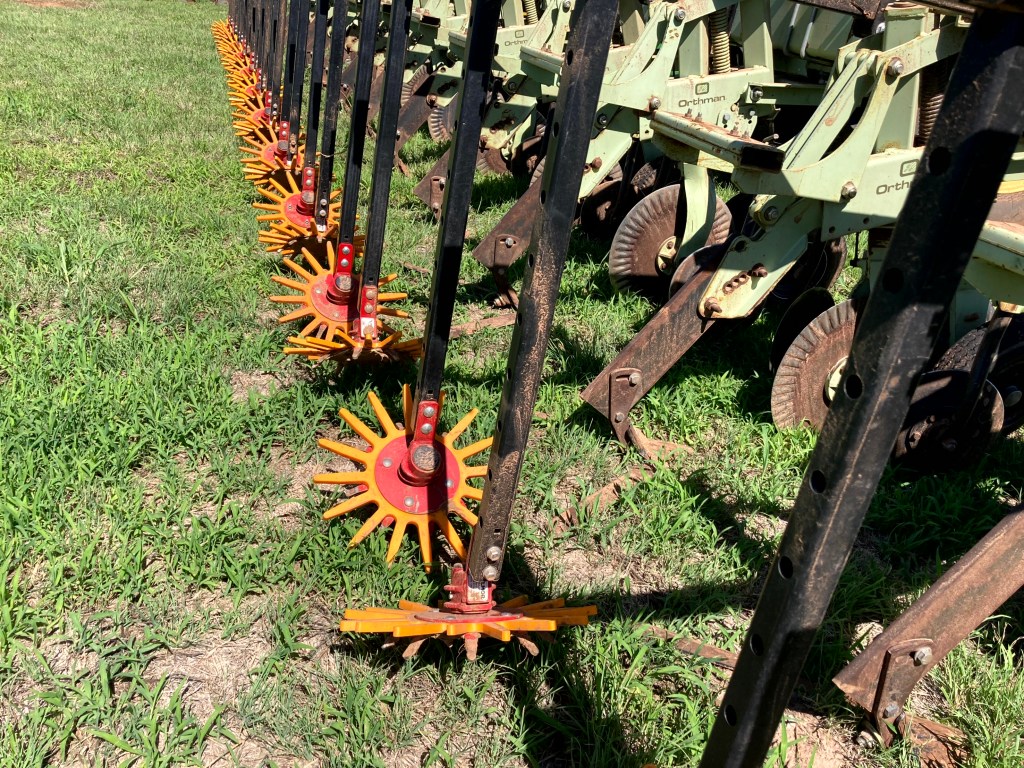
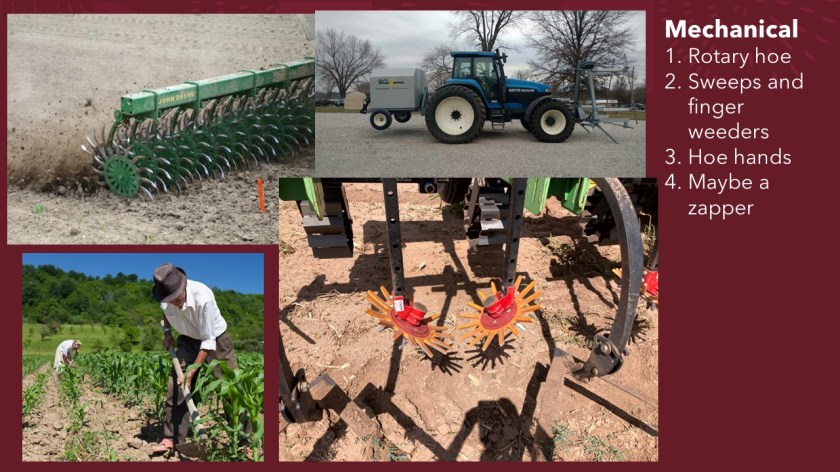
Most of Texas’ organic farmers start with a rotary hoe then move to sweeps and finger weeders and finish with hoe hands. The longer a field is organic the better the weed control…. (Steel In the Field is an old but really good look at Tools for Weed Management) Click this link above!
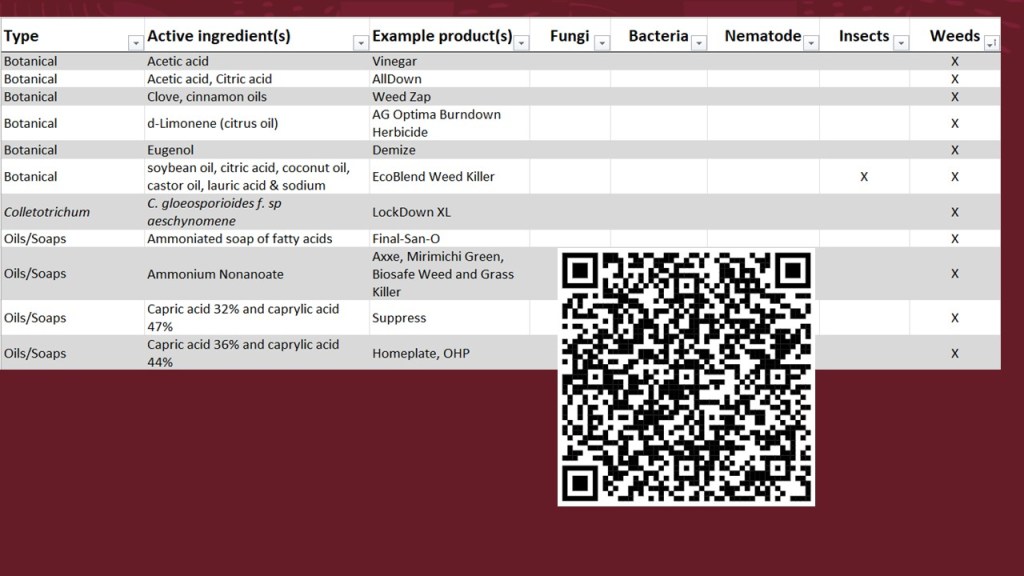
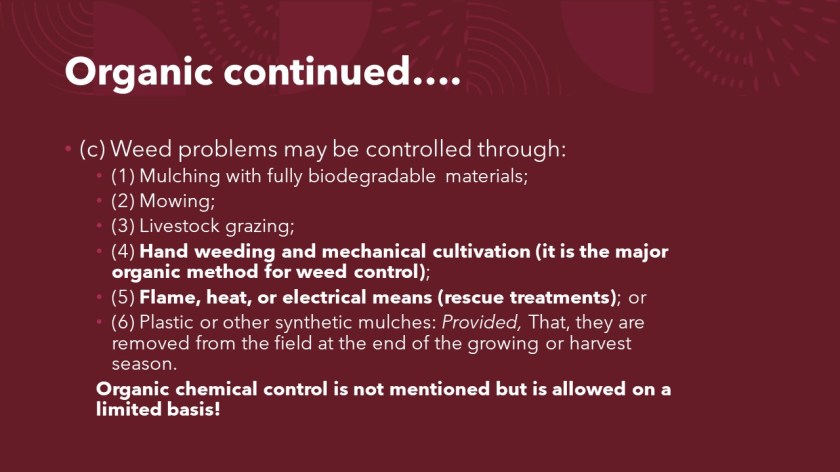
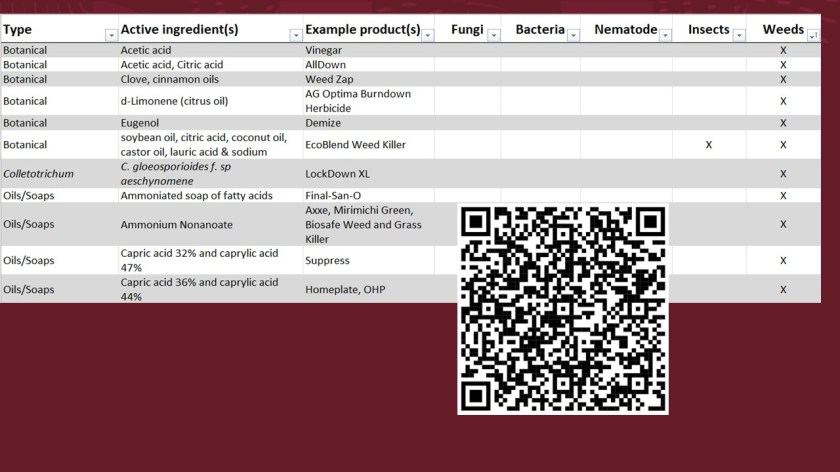
Organic does have “chemicals” approved for weed control and in this slide, you see that there are not many. The QR code takes you to the whole list. or just click here: Organic Products List
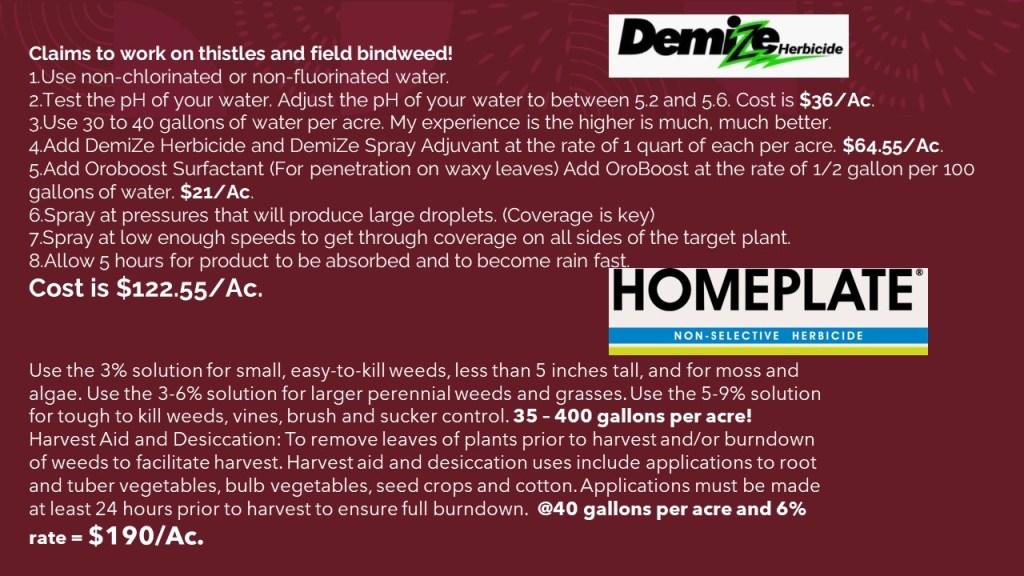
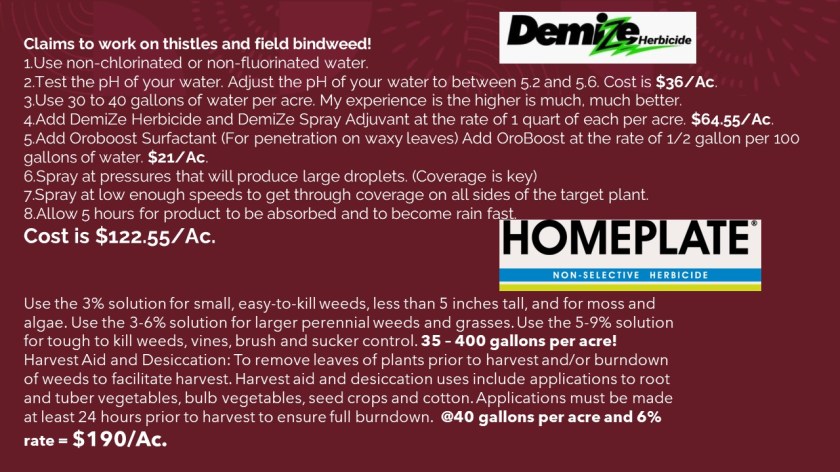
This slide illustrates the reason that organic “chemicals” are used sparingly. The cost per acre makes them expensive but they work great for spot treatments around the farm.
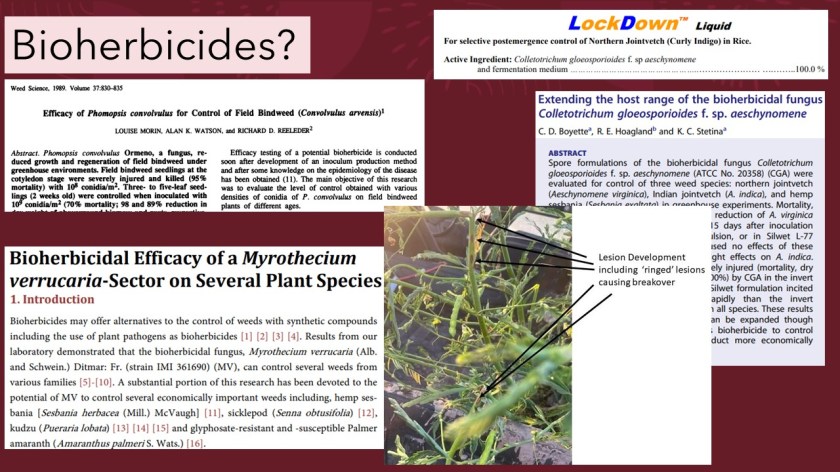
This last slide emphasizes an exciting potential for organic weed control – Bioherbicides!
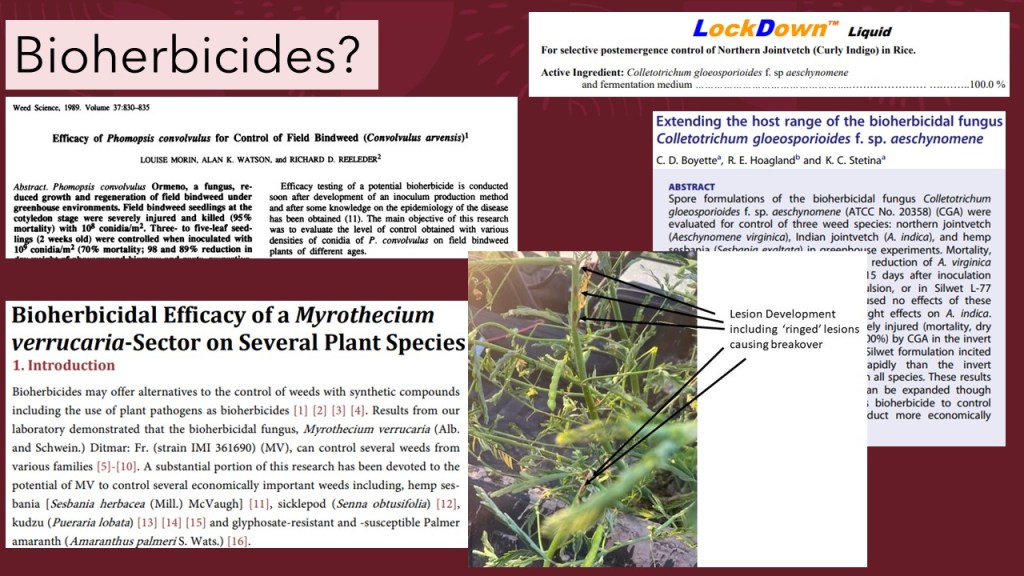
Bioherbicides are made from bacteria or fungi that infect a particular weed with the hope that it will kill the weed if the bacteria or fungus is applied at high numbers. In this slide I talk about fungi that can infect field bindweed, pigweed, and northern joint vetch. These naturally occurring organisms are found in Texas infecting our weeds but generally not in high enough numbers to kill out the weeds in a field. LockDown is a good example of a fungus found on northern joint vetch (NJV) in Texas rice fields, but it doesn’t wipe it out. But when you take millions and millions of pieces of this fungus and spray it on a NJV weeds in rice fields it infects and ultimately kills northern joint vetch!
Here is another look at various organic control for a very bad weed, field bindweed. Organic Control of Field Bindweed – Click the link to see.
Or you might want to check this out: Best Cover Crops for Weed Control and Fertility
Or how about this video on weed control with tillage: Weed Control for Organic
SARE Book titled Manage Weeds on Your Farm is an excellent resource with lots of pictures on different weeds.
For another potential option, we can use the type of planting to help control weeds. This research study provides great insight into using a newer type of drill for wheat with tremendous reduction in weeds. Organic Research Winner!

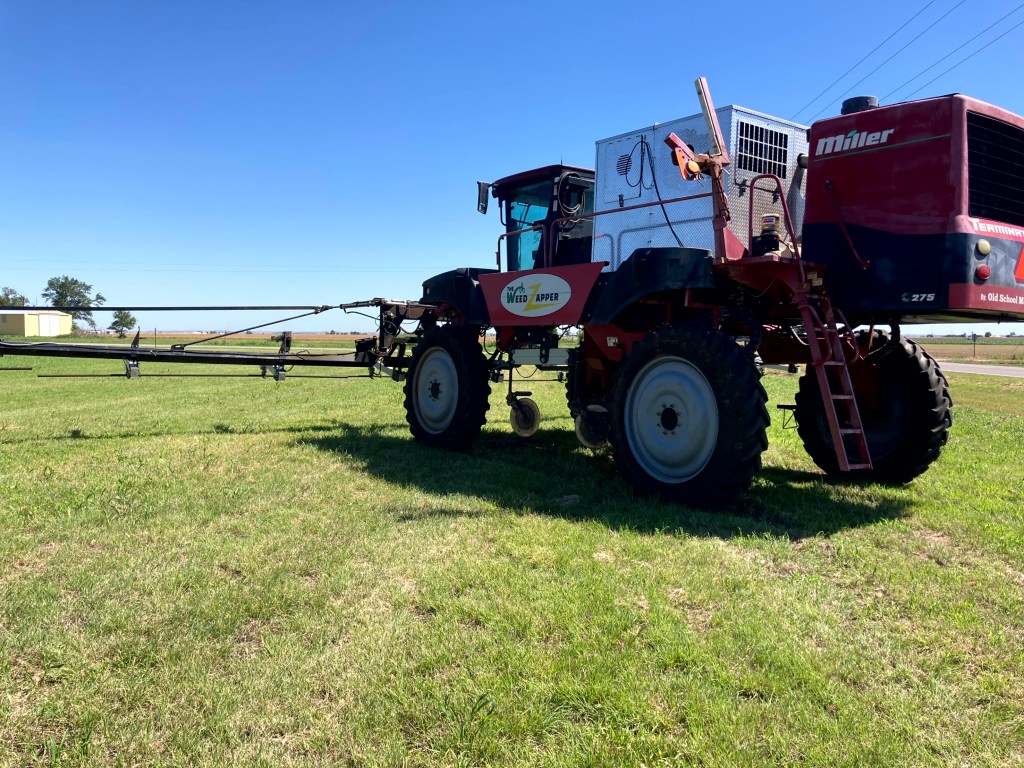
I am adding this into the discussion. Several organic growers are using Weed Zappers in row crops and here is a use in perennial crops.
Weed management is a significant problem in organic orchard and berry production, due to limitations on crop rotation and tillage between crops. Organic weed control requires frequent soil disturbance, hand labor, high rates of organic herbicides, or the application of large amounts of organic or synthetic mulches. These practices can be barriers to economic, soil health and sustainability goals. In this project, a team of researchers in three states will consider the performance, safety, and economic and environmental sustainability of electric weed control (EWC) in perennial crops. To read more just click this link and see video, updates and pictures.

Discover more from Texas A&M AgriLife Organic
Subscribe to get the latest posts sent to your email.

 Texas A&M AgriLife Organic
20 thoughts on “Organic Weed Control”