
Because I subscribe to information from SARE or Sustainable Agriculture Research & Education I got a recent email annoucing that this Survey Report was ready and downloadable. I can’t help but look at things like this to see if there is anything Texas Organic producers can learn or use to make changes. Cover crops are a big, controversial issue, and one that I can get lots of opinions on, no matter where I go in the state. So let me share some of my “opinions.”
795 farmers (probably most are conventional farmers but some are certainly organic) who are current cover crop users, former users, and who have never used cover crops from 49 different states, filled out the survey. Here is a look at the distribution.
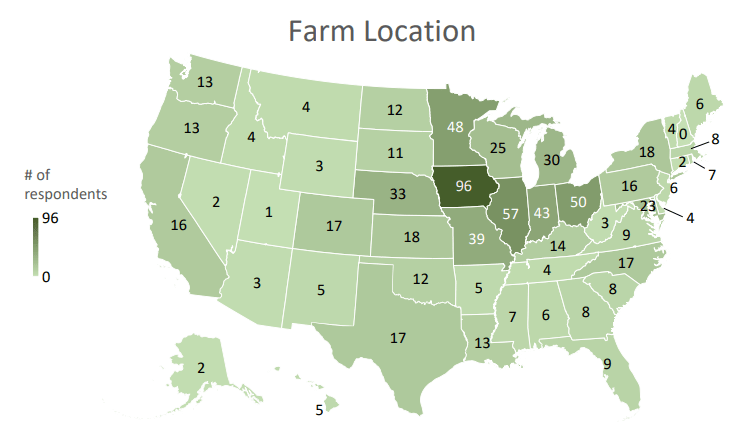
As you can see only 17 from Texas filled out the survey and it is easy to see that the Midwest is overloaded with participants! This may sound a little strange or maybe you know (like I do) that Texans don’t do surveys, they just don’t like them. That said, look at the sources they used to advertise the survey and encourage farmers to fill it out.

Maybe you are in one of these “groups” but I never did see or get a notice and I have a farm and have planted cover crops. My general feeling is that the Midwest has a lot of farmers and a lot of infrastructure is built around those farmers so they do get a lot of attention. Also, we struggle planting cover crops and so we are not going to get near as many farmers “excited” about a cover crop survey. BUT, because we dont get excited about cover crops we dont get the potential interest in developing cover crop payments or cover crop insurance in Texas. It is a “chicken and egg” kinda thing.
What is the median (the number right in the middle of a list of numbers) age of farmers who did the survey? 59, which is slightly older than the median age of all farmers in the US at 57.5 years. What is interesting is that 66.6% of all farmers in this survey are above 50. The US is just getting older and farmers are aging fast!
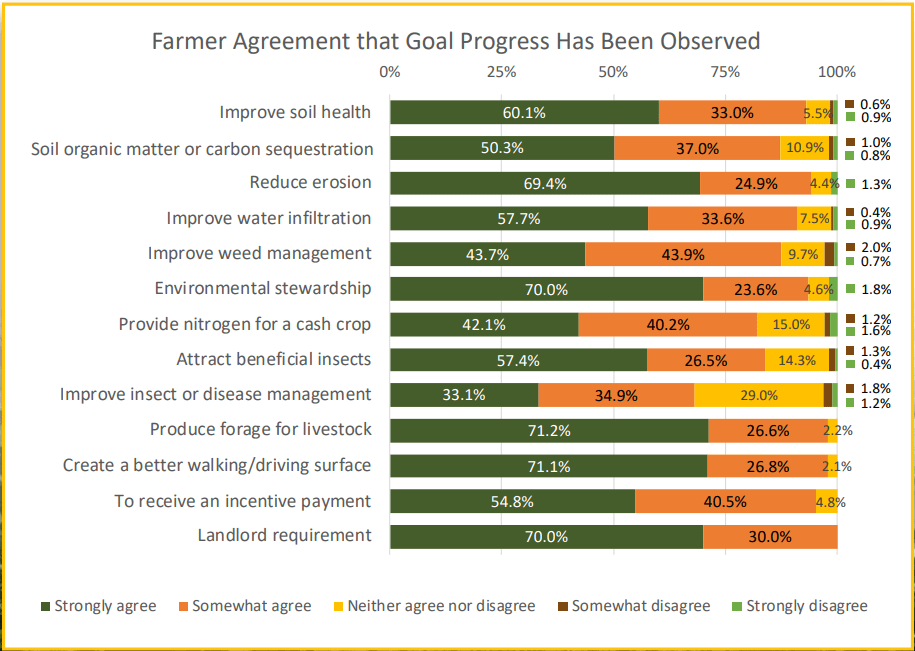
I am going to skip over a lot of demographic information in the survey to get to some data on cover crops. I love this chart above because it gives us a reason for planting cover crops, in other words, “why are you planting a cover crop and does it do what you want?”
For organic growers in Texas I do believe that all of you have said to me any one of the top 5 reasons listed above are more than likely in your top 5 reasons too. If you are farming organic you get these benefits! These farmers agree because they are observing these benefits from cover crops in every state they are planted.
Okay, there is a lot more information in the report, but I want to mention this because it is a question I get a lot – what cover crop to plant? First let’s take a look at the acres planted to each species so you get an idea of the importance farmers placed on the species.
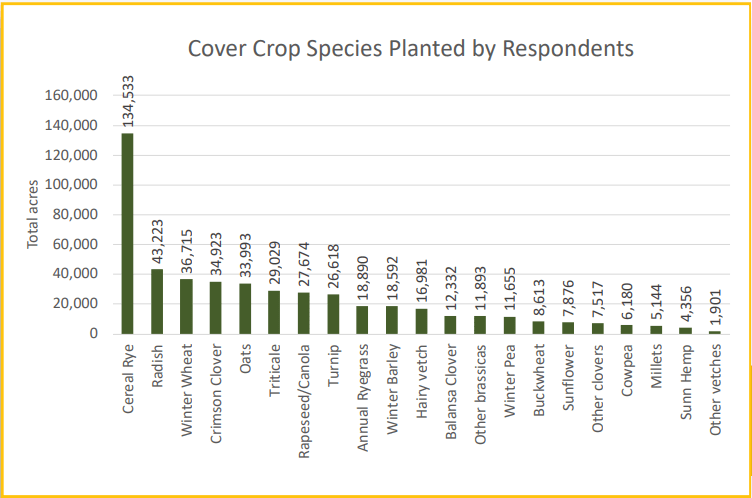
You can tell that cereal rye is by far the most popular either by itself or in a mix. I was surprised by the acres dedicated to radishes but I do know they are popular in the Midwest. I really thought that cowpeas, sunn hemp and other summer cover crops would be planted on more acres but probably only in southern states and as I mentioned not many farmers in southern states participated in the survey.
Now here is a chart about what is used in cover crop mixes. I thought this was interesting and did validate the recommendations I give to organic farmers.
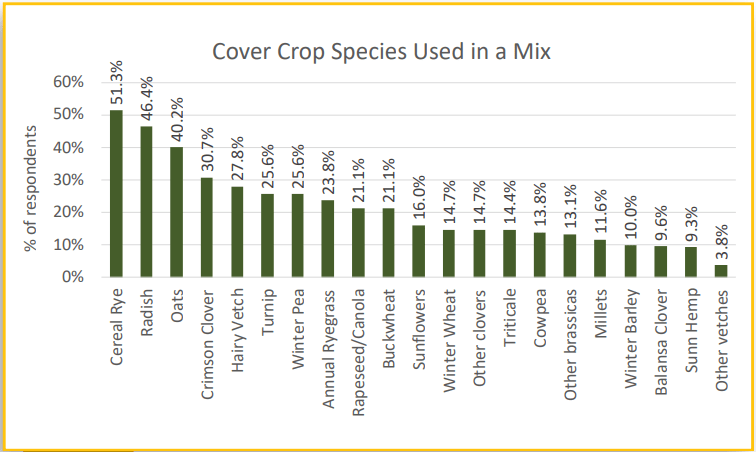
I like cereal rye (I am hoping Carl Pepper plants some barley on a few acres this year so we can see if it works in West Texas) and I like Hairy Vetch both in a mix. You can add in radishes or turnips if you understand that they probably won’t make it through the winter. I have never had much luck with clovers in Texas and I have trouble planting Austrian winter peas since it is such a big seed. Mine end up in streaks or only in one place!
One last chart and I will stop. This part of the survey deals with your information sources and I am very interested in how farmers learn – it is my job!

You will notice that farmers predominately learn by doing and learn from each other because they are “doing” it. I also realize that Ag Media is important and yet Ag Media is generally getting information from Extension, Research and Industry. That said I am very pleased to see Extension ranked fourth in this list and to me that is about right. My take away from this is that Extension should be doing cover crop demonstrations on farmers fields (learn by doing) and inviting other farmers to come learn. Sounds like a good old fashioned “Extension Crops Field Day!”
Let me know your thoughts, I am always open to new ideas. If you want to download or read the report just click on this link. 2022-23 National Cover Crop Survey
Discover more from Texas A&M AgriLife Organic
Subscribe to get the latest posts sent to your email.

 Texas A&M AgriLife Organic