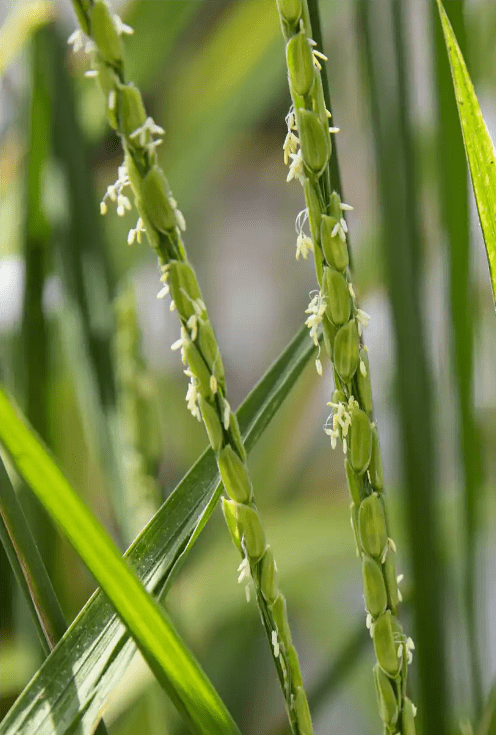
Credit: The Guardian
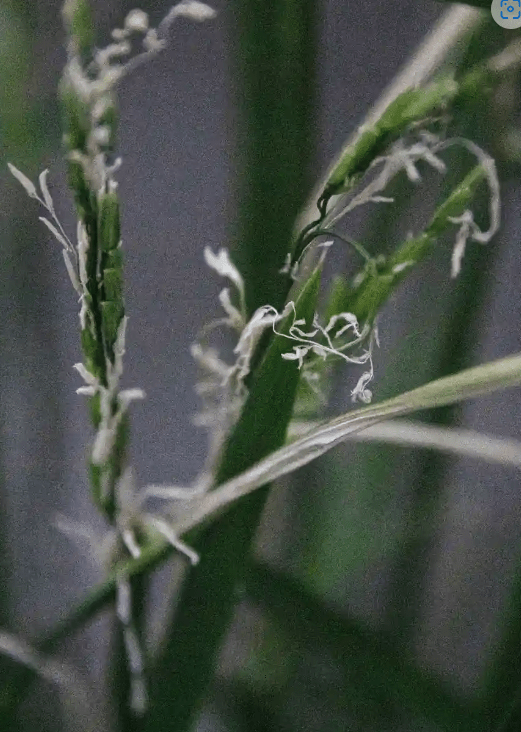
Credit: The Guardian
An article in The Guardian entitled, “Night-time heat is killing crops. Scientists are rushing to find resilient plants” That should scare most of us but not all is lost! Yes, we are seeing “climate change” but we are adapting and doing it very well.
Temperature is considered a primary factor affecting the rate of plant development, and I think every farmer knows that. Every year we are seeing extremes in daytime temperatures but more importantly we are seeing a tightening of the difference between daytime and nighttime temperatures. It does not cool off as quickly or as much at night so that the spread between day and night is smaller such that the average temperature is higher.
What does this mean? First it can mean that varieties are not as productive as they once were. In rice, breeders are working on new rice varieties that can handle higher temperatures both day and night. We are working on the same thing in corn varieties. If you notice that grain fill is different, blanks are more prominent or yields are down it could be temperature, even nighttime temperatures!
This summer has seen 105-degree daytime temperatures but instead of cooling off to 75 degrees at night there have been many nights where the low was only 84 degrees and that only before dawn. Want to know if this is causing problems, just look at the trees. They are fast turning brown or just dropping leaves and there is still a lot of summer to go!
Temperatures, Rainfall, Soil Moisture, Soil Temperatures
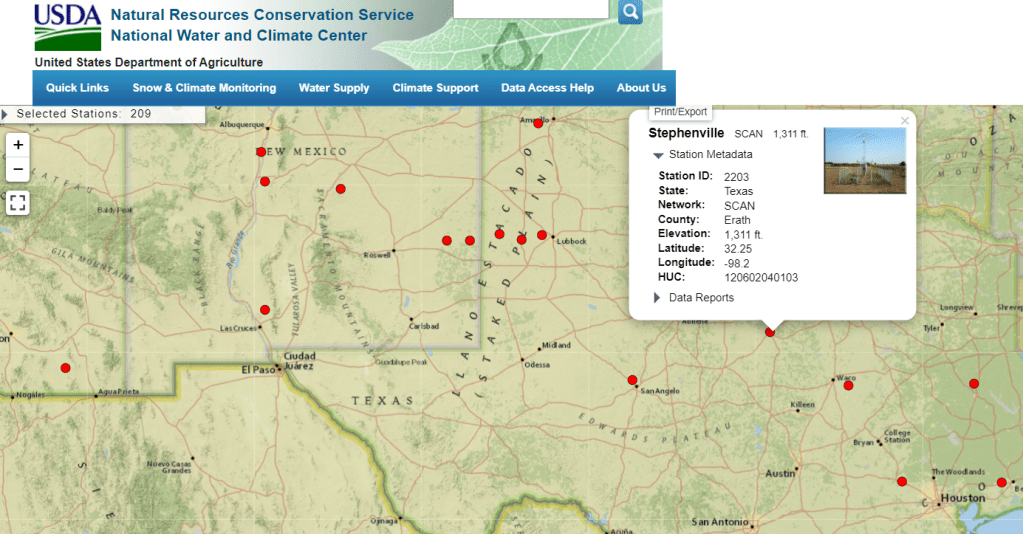
You might not realize it, but there is a lot of information available to you through the NRCS weather stations located in many parts of the state. There is information on these sites which can be useful for planning, planting, or scheduling field operations.
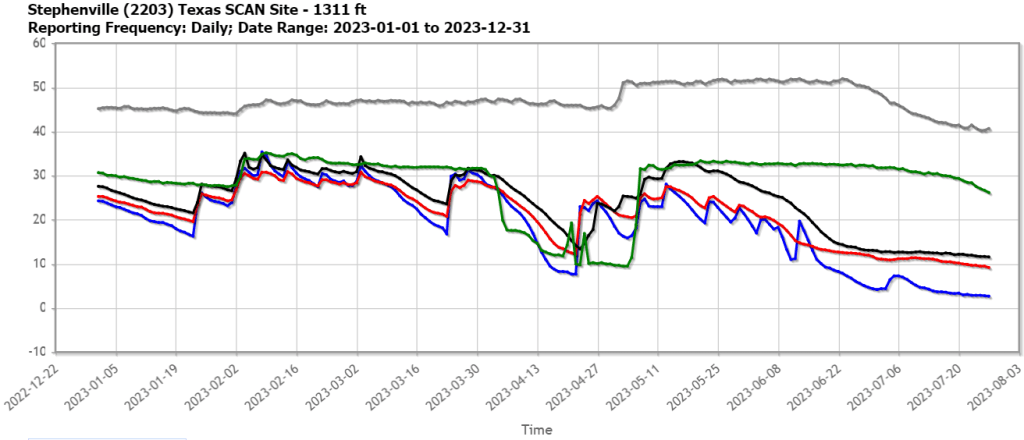

The above chart is just one example of many available on these sites. This is for Stephenville and shows the soil moisture from January to August 2023.
The lines show the different soil moistures at different depths and for some reason the 20” (grey) is not working. But notice the rains in late winter bring up all moisture levels but especially the 40” depth and it stayed at 30% moisture until recently. Just drive around Central Texas and you can see we are burning up. It is amazing what 60+ days of hot temperatures and no rain can do!
How do you get to a station close by? Just go here: https://tinyurl.com/34c7a8hv You will be at the NRCS Texas Dashboard and click on the SCAN tab. Once in the SCAN tab you will see the map like the one above and then click on a red dot for the weather station and pick Data Reports. Simple and yet lots of good information.
Discover more from Texas A&M AgriLife Organic
Subscribe to get the latest posts sent to your email.

 Texas A&M AgriLife Organic