
Utrisha N from Corteva Biologicals is an OMRI certified dry powder of Methylobacterium symbioticum, a bacterium that enters the plant and takes nitrogen from the atmosphere for the plant to use. It comes in 50 ounces packages that will treat 10 acres (5 oz. per acre). It is mixed with water and sprayed with a minimum of 10 gallons of water per acre.
Utrisha N Product Information on Corteva Biologicals website
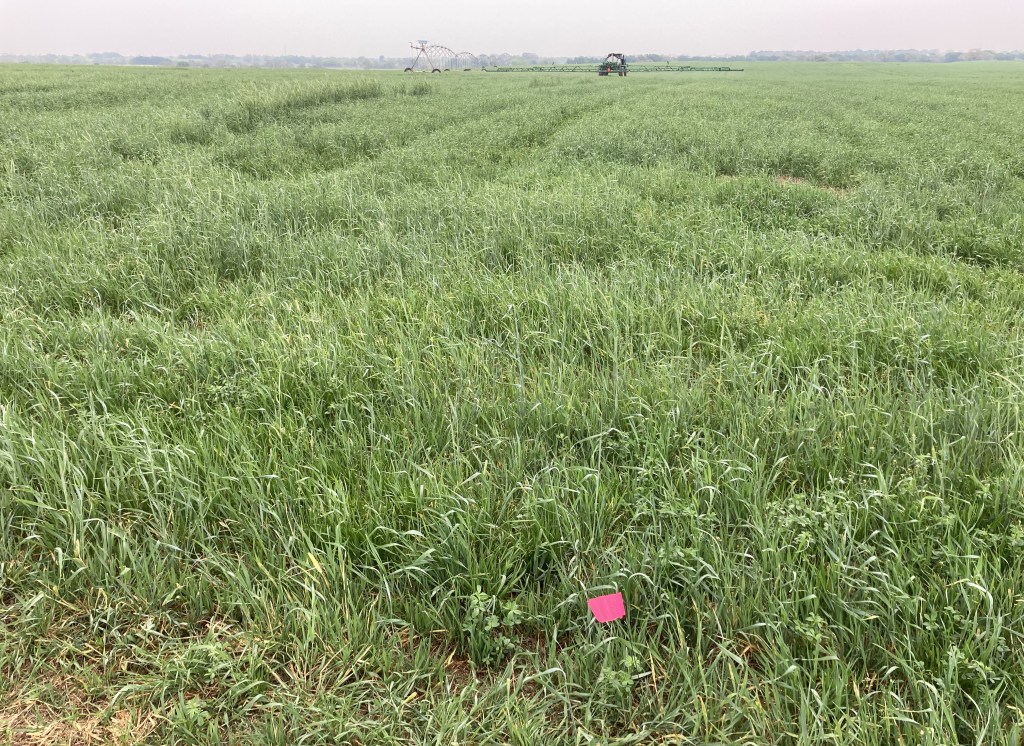
On April 4th I applied the Utrisha N on triticale being grown for silage (picture below). I wanted to see if Utrisha N would increase silage protein when applied late in the season (preboot to boot stage). The Utrisha N was being applied by a commercial rig as a liquid and I marked off a sizeable area that was not treated to be able to harvest as an untreated check.
I took two harvests from the plots (2 plots with 2 replications), one early harvest on April 18 and one late harvest on May 3rd. I did not take a yield from each plot since the Utrisha N was applied after vegetative growth had ceased and we were into grain production. The cost of organic protein sources can mean a lot of extra money spent on organic grain when there could be a cheaper source! Forages are always a cheaper option for both energy and protein and they help stimulate milk production. But they must be high quality to fit in a milking cow ration.

The longer the plants were in the field and continued to mature to grain, the overall crude protein % went down (typical, with maturity). It is amazing how quickly overall crude protein drops with maturity as seen by the untreated area. But the Utrisha protein reduction was less with time than the untreated area and more than paid for the Utrisha N treatment and application at $20 per acre!!
Discover more from Texas A&M AgriLife Organic
Subscribe to get the latest posts sent to your email.

 Texas A&M AgriLife Organic